El grabado subsuperficial en cristal, también llamado grabado láser 3D en cristal, es un proceso que utiliza un láser enfocado para crear miles de diminutos puntos de fractura dentro de un bloque de cristal macizo y formar una imagen tridimensional que parece flotar en el material sin tocar su superficie exterior. El resultado es un diseño luminoso y aparentemente ingrávido, suspendido dentro de un vidrio impecable, y por eso es uno de los acabados más llamativos disponibles para premios de gama alta y piezas conmemorativas.
Fabit produce el grabado subsuperficial en cristal en su taller de Amberes y combina un control láser preciso con una cuidadosa selección del cristal para que la imagen interna se lea con claridad y el material que la rodea se mantenga ópticamente puro. Es un acabado que recompensa la artesanía y la atención, y es un favorito para reconocer hitos en los que el propio objeto debe sentirse extraordinario.
Cómo funciona el grabado subsuperficial
A diferencia del grabado superficial, que marca el exterior de un material, el grabado subsuperficial se realiza en el interior profundo de un bloque transparente. Un haz láser se enfoca en un punto preciso dentro del cristal. En ese punto focal, la energía es lo bastante intensa para provocar una fractura microscópica, un diminuto punto blanco, sin dañar el material que el haz atraviesa para llegar hasta allí. Al desplazar el punto focal por el volumen del cristal y disparar repetidamente, la máquina va formando una nube de estos puntos. Dispuestos correctamente, se leen como una imagen tridimensional coherente.
La imagen se crea a partir de un modelo 3D o de un conjunto de puntos en capas calculados a partir de una ilustración. Como los puntos existen a distintas profundidades, la imagen tiene volumen real: vista desde diferentes ángulos muestra una dimensionalidad que un grabado plano no puede ofrecer. El cristal que la rodea permanece intacto y perfectamente claro, y eso es lo que da al efecto su característica cualidad flotante. La precisión necesaria es considerable, porque el punto focal debe caer a una fracción de milímetro de su objetivo y el momento de cada pulso debe ser exacto. Por eso el proceso es totalmente digital y lo realiza una máquina, pero aun así exige a un operario experimentado que entienda cómo responde cada calidad de cristal y que pueda ajustar el espaciado de los puntos para que la imagen terminada no se vea nunca ni tenue ni nublada.
Convertir una ilustración en un modelo 3D
La calidad de un grabado subsuperficial depende en gran medida de la nube de puntos que lo genera. Un logotipo, un retrato, un edificio o una forma abstracta deben traducirse primero a una disposición tridimensional de puntos con la densidad y la distribución adecuadas. Con pocos puntos, la imagen se ve tenue; con demasiados, se vuelve nublada y pierde contraste. Nuestro equipo de diseño prepara y prueba estos modelos para que la imagen terminada tenga profundidad donde la necesita y claridad donde la necesita. En retratos y logotipos detallados, esta preparación es donde reside buena parte de la artesanía.
Elegir el cristal adecuado
El material importa tanto como la máquina. El cristal óptico de alta pureza, con muy bajo contenido de plomo y mínimas inclusiones internas, da el resultado más limpio, porque cualquier defecto natural competiría con la imagen grabada. La forma del bloque también influye en el efecto: los cubos, las torres, las formas facetadas y las formas libres interactúan de manera distinta con la luz. Puede consultar las opciones de cristal y vidrio con las que trabajamos en nuestra resumen de materiales, donde explicamos cómo se comporta cada calidad con el grabado subsuperficial.
Por qué el grabado subsuperficial es adecuado para premios premium
Algunos momentos de reconocimiento piden algo que resulte realmente especial, y una imagen 3D suspendida dentro de un cristal impecable ofrece justo eso. El acabado transmite una sensación de permanencia y valor que resuena con los galardonados de alto rango, los reconocimientos por años de servicio y los premios principales de un evento. Como la imagen está protegida dentro del material, no se puede rayar ni desgastar, por lo que la pieza se mantiene impecable de forma indefinida. Combinado con la iluminación, ya sea una sencilla base LED o la luz ambiente de la sala, el grabado cobra vida y atrae la mirada, lo que lo convierte en una pieza central natural.
Iluminación y presentación
El grabado subsuperficial y la luz van de la mano. Una base LED colocada bajo el cristal envía luz hacia arriba a través del bloque e ilumina los puntos de fractura, de modo que la imagen interna brilla. Los distintos colores de luz cambian el ambiente, desde un blanco frío y clínico hasta un tono cálido y acogedor. Incluso sin base, la luz natural y direccional de la sala captará los puntos y revelará la imagen. Cuando diseñamos un premio de cristal, tenemos en cuenta cómo y dónde se exhibirá, para que la presentación haga justicia al grabado del interior.
Combinar el grabado subsuperficial con otros acabados
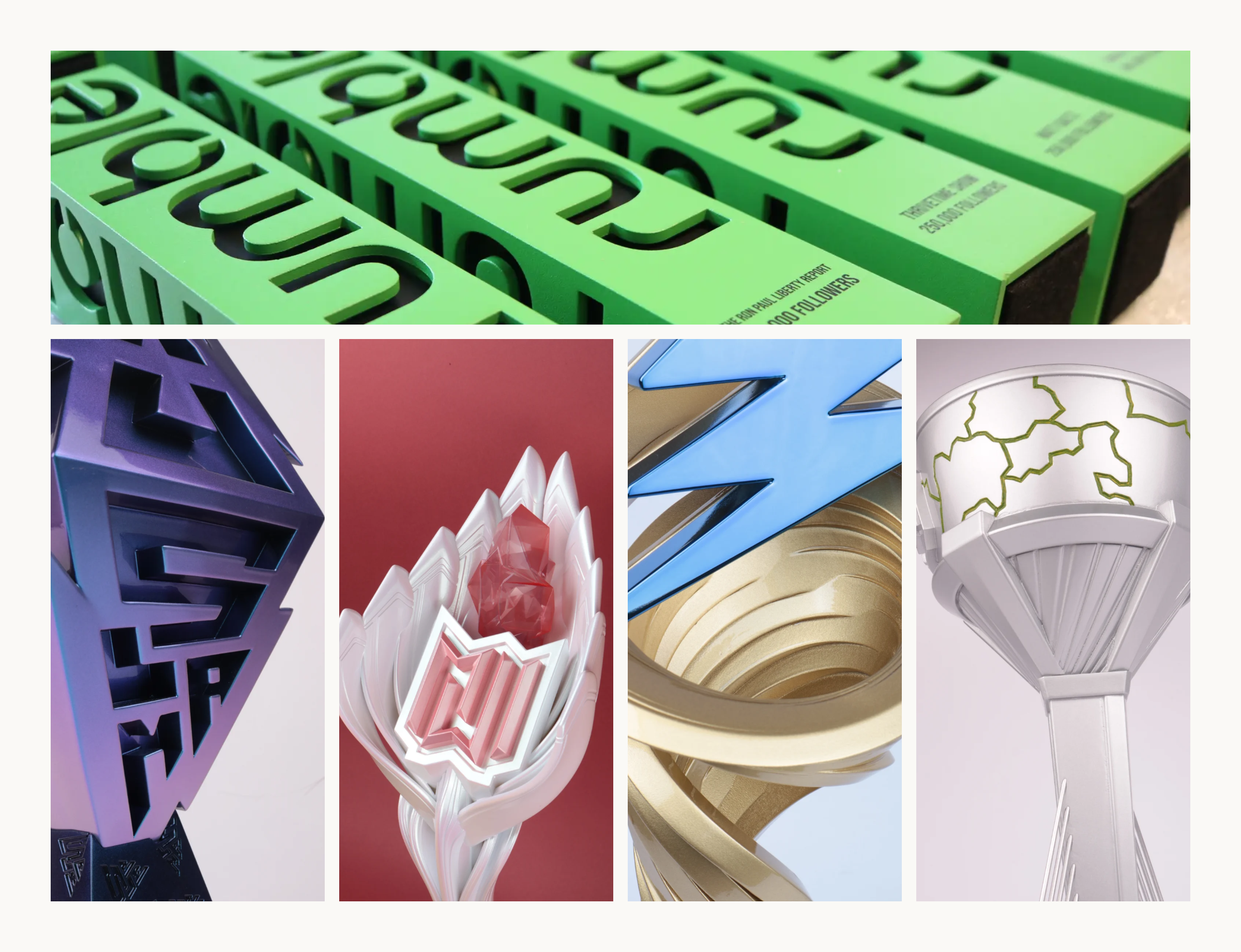
El grabado subsuperficial suele ser el protagonista de una pieza, pero rara vez trabaja solo. Con frecuencia lo combinamos con grabado láser superficial para textos y fechas, con chorro de arena o tallado con arena para acentos esmerilados y con relleno de color para introducir el color de marca en la base o en un elemento metálico que lo acompañe. Reunir estas técnicas es lo que convierte un premio de cristal en un objeto diseñado y no en un artículo de catálogo. Nuestra servicio de trofeos personalizados muestra cómo se combinan estos acabados en encargos reales.
Cómo produce Fabit su grabado en cristal
Todo se fabrica en nuestro propio taller de Amberes, de modo que controlamos la selección del cristal, la preparación de la nube de puntos, el grabado y la inspección final bajo un mismo techo. Compartimos una prueba o una vista previa antes de la producción y revisamos cada bloque terminado para comprobar la claridad interna y la nitidez de la imagen antes de embalarlo. El cristal es frágil, por lo que lo embalamos con cuidado y enviamos a todo el mundo con opciones de presentación protectoras. Respondemos a cada consulta en 24 horas. Para empezar a dar forma a su idea, visite nuestro estudio de diseño online.
Preguntas más frecuentes
¿Pueden grabar una foto dentro de un cristal?
Sí. Podemos convertir una fotografía adecuada, incluido un retrato, en un modelo de puntos 3D. La calidad de la imagen y la iluminación de la foto original influyen en el resultado, por lo que evaluamos cada una antes.
¿Debilita el grabado el cristal?
No. Los puntos de fractura son microscópicos e internos, de modo que no comprometen la integridad estructural de un bloque bien elegido.
¿Podemos añadir también nuestro logotipo y texto?
Por supuesto. Combinamos la imagen 3D interna con un grabado superficial para logotipos, nombres y fechas dentro de un único diseño coherente.
¿Necesita una base con luz?
Una base realza el efecto, pero no es imprescindible. La imagen se ve con luz normal; una base simplemente hace que brille.
Términos relacionados