
El grabado con punta de diamante es un método de marcado mecánico en el que una punta de diamante fija se arrastra por una superficie metálica con presión controlada, trazando líneas finas, brillantes y permanentes sin calor ni tinta. Es una de las técnicas mecánicas más antiguas que siguen valorándose en la creación de premios de gama alta, apreciada por la línea delicada y brillante como una joya que deja sobre metales blandos y recubiertos. En Fabit, el grabado con punta de diamante es el método que elegimos cuando un cliente busca la elegancia discreta de una línea trazada y no el aspecto vaporizado de un láser.
Cómo funciona el grabado con punta de diamante
En lugar de retirar material con una herramienta giratoria o un haz de luz, el grabado con punta de diamante utiliza una única punta cónica de diamante sujeta en un portaherramientas con resorte. La máquina baja la punta sobre la superficie y la desplaza por los trazados definidos por el diseño. El diamante desplaza y bruñe el metal, y abre un surco superficial y muy reflectante. Como el proceso es puramente mecánico y la punta nunca gira, la línea resultante es excepcionalmente fina y limpia, con un brillo característico que procede de las paredes pulidas del canal trazado.
La presión y el número de pasadas determinan la profundidad y la visibilidad de la línea. Una sola pasada ligera da una marca sutil y refinada. Varias pasadas o una presión mayor ensanchan y profundizan el surco para un texto más marcado. Este control hace que la técnica sea muy adecuada para escrituras elegantes y rotulación tradicional de presentación. El ángulo con el que se coloca el diamante también define el carácter de la línea: una punta cónica más aguda abre un canal más estrecho y brillante, mientras que una punta más ancha extiende la marca para lograr un aspecto más suave. Como no interviene el calor, no hay decoloración ni deformación alrededor de la marca, lo que mantiene las superficies pulidas impecables hasta el borde mismo de las letras. Esta ausencia de zona afectada por el calor es una de las razones discretas por las que el grabado con punta de diamante sigue siendo un favorito para las placas de presentación finas, donde cualquier halo o quemadura delataría el proceso y restaría la sensación de sobriedad a la que la técnica está al servicio.
Los mejores materiales para el grabado con punta de diamante
La técnica prefiere metales blandos y superficies recubiertas, donde el diamante puede desplazar el material con limpieza. Combina de forma natural con las placas y los componentes metálicos descritos en nuestra resumen de materiales.
- Latón y bronce: grabado de línea brillante y cálida, apto para placas clásicas.
- Aluminio: lo bastante blando para un trazado liso y uniforme.
- Metales recubiertos y pintados: el diamante deja a la vista el sustrato y crea un fuerte contraste.
- Chapado en plata y en oro: ideal para una rotulación de presentación fina y lujosa.
- Peltre y aleaciones blandas: admiten una línea limpia para placas de trofeos tradicionales.
Por qué el grabado con punta de diamante encaja con los premios premium
El grabado con punta de diamante produce una calidad de línea que muchas personas asocian con la calidad de las piezas heredadas y con la tradición. Mientras que el marcado láser puede parecer contemporáneo y técnico, una placa trazada con diamante resulta atemporal. La marca es permanente, no hay tinta que se desvanezca ni recubrimiento que se desprenda, y la calidad reflectante del surco da a las letras una vida sutil al captar la luz. Para placas de presentación sobre bases de madera, premios en estuche y trofeos tradicionales, este suele ser exactamente el registro que busca el cliente.
Diseño y tipografía
La técnica destaca en el trabajo basado en líneas. Las escrituras elegantes, las tipografías con serifa fina y los bordes delicados se reproducen de maravilla porque el diamante puede seguir trazados intrincados sin la pérdida de material de una herramienta más ancha. Las zonas rellenas son menos naturales, porque deben construirse con muchas líneas muy próximas, por lo que los logotipos compactos y en bloque suelen encajar mejor con otros métodos. Orientamos a los clientes hacia diseños que aprovechan la fortaleza del diamante, y nuestro estudio de diseño es un lugar útil para dar forma a la rotulación y a la composición antes de iniciar la producción.
Grabado con punta de diamante frente a grabado láser y rotativo
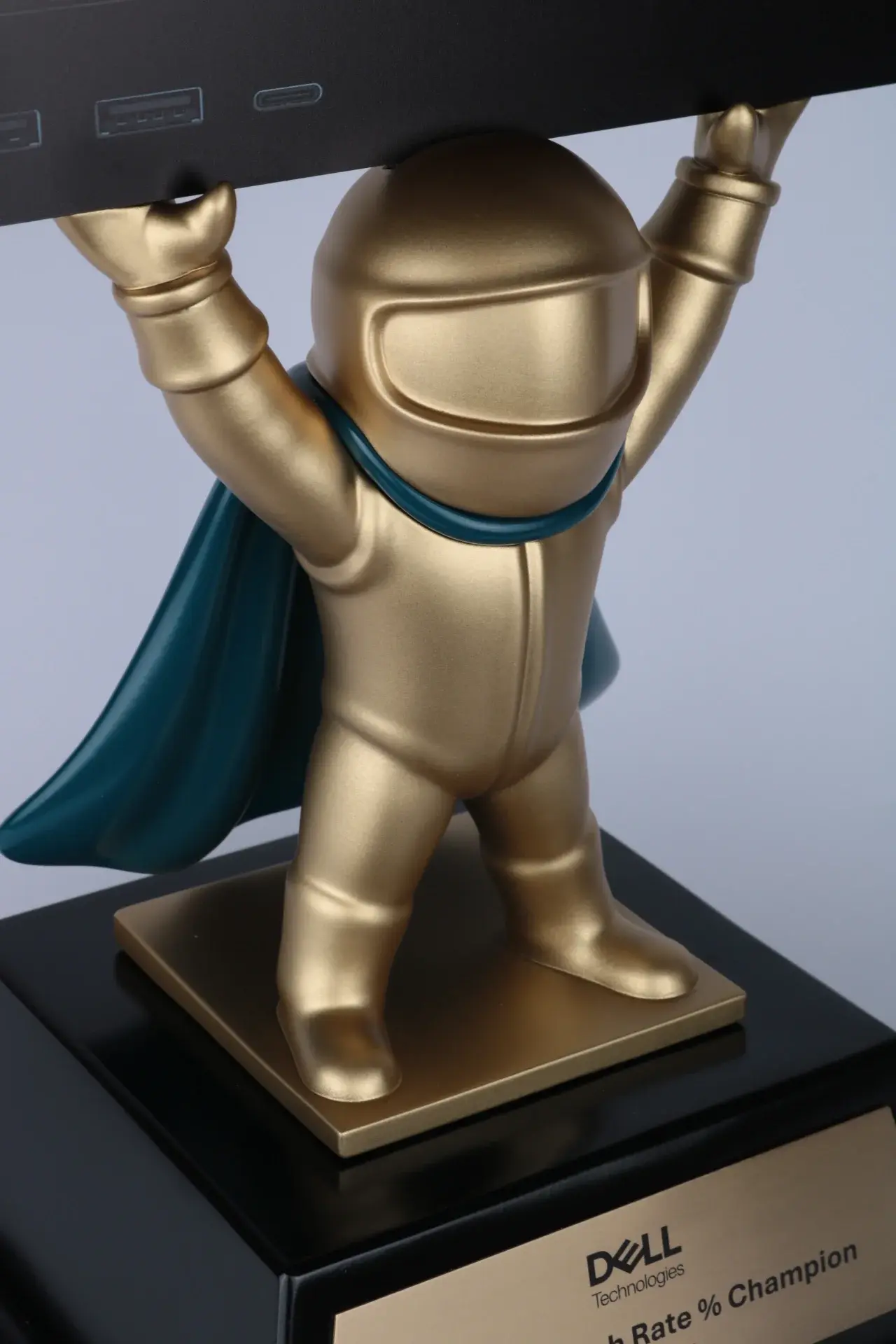
Frente al grabado con láser de fibra, el grabado con punta de diamante ofrece una línea más suave, más brillante y más tradicional, sin efecto térmico sobre el metal circundante. Frente al grabado rotativo, que usa una fresa giratoria, el grabado con punta de diamante es más silencioso, produce un detalle más fino y deja un canal más pulido, aunque no puede cortar tan profundo. Muchos premios refinados usan el grabado con punta de diamante para el texto de presentación y reservan métodos más profundos para el detalle estructural, una combinación que resolvemos de forma habitual en servicio de trofeos personalizados.
Control de calidad y acabado
Tras el grabado, las placas se inspeccionan bajo luz rasante para confirmar que la línea es continua y de brillo uniforme, ya que una presión irregular puede dejar un surco que se apague en algunos puntos. Se elimina cualquier rebaba levantada en el borde del canal para que la superficie siga siendo lisa al tacto. En los metales chapados cuidamos especialmente que el diamante no haya atravesado hasta una capa base de contraste, salvo que ese contraste sea el efecto buscado.
Notas prácticas para compradores
El grabado con punta de diamante es muy adecuado para series cortas y para placas de presentación únicas, y gestiona con elegancia la personalización de última hora, porque una sola placa puede grabarse por separado sin penalización de preparación. Esto lo convierte en una elección fiable cuando los nombres de los ganadores se confirman cerca del evento. Con producción propia y nuestra respuesta en 24 horas, podemos convertir una lista de nombres definitiva en placas terminadas con rapidez, incluso cuando el calendario es ajustado.
Preguntas más frecuentes
¿Es profundo el grabado con punta de diamante? No, es deliberadamente superficial. Su belleza reside en la línea fina y brillante de la superficie, no en la profundidad.
¿Puede grabar acero inoxidable? El acero inoxidable duro supone un reto para la punta de diamante. Para metales duros recomendamos en general el grabado con láser de fibra.
¿Se desgasta la línea? No. El surco está tallado en el metal y es permanente en condiciones normales de exposición y manejo.
¿Puedo combinar el grabado con punta de diamante con un logotipo? Sí. Los logotipos de líneas encajan muy bien con el método, y a menudo combinamos texto trazado con un emblema marcado con láser para crear contraste.
El grabado con punta de diamante sigue siendo una opción de acabado discretamente lujosa, que da a las placas de presentación y a los premios tradicionales una línea fina y brillante que habla de oficio y de permanencia.
Términos relacionados