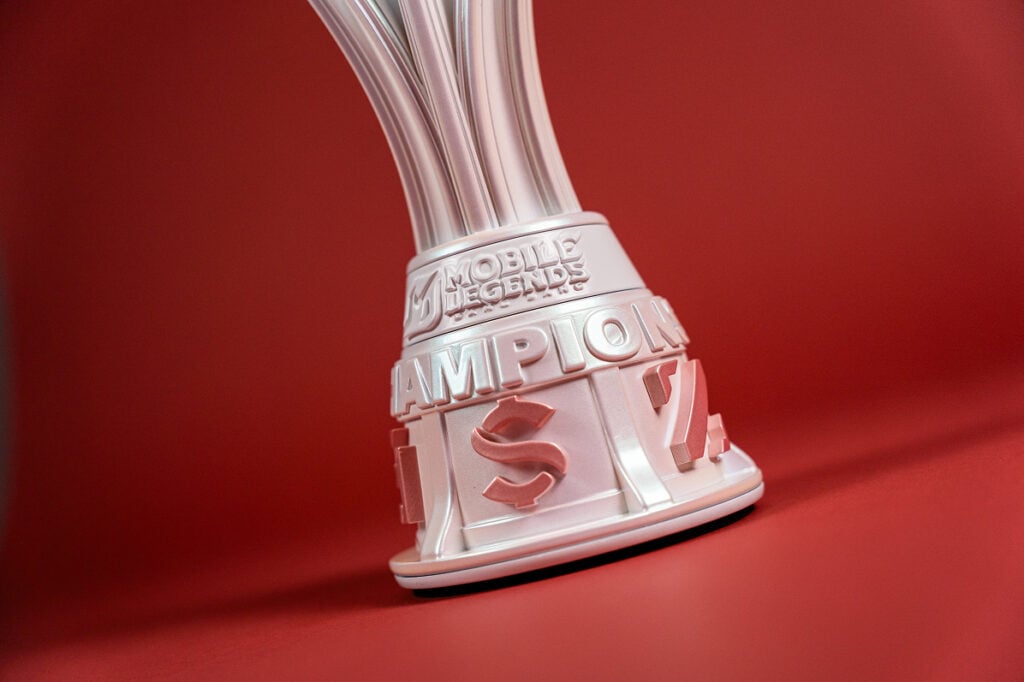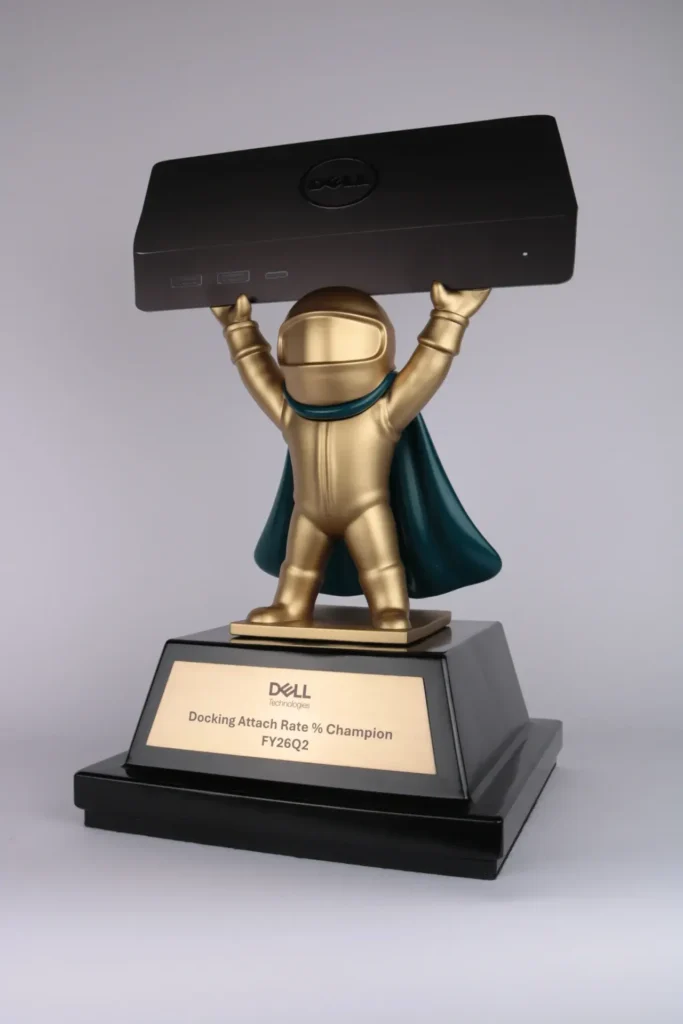
Electroplating is a finishing process that uses an electric current to deposit a thin layer of metal, such as gold, silver, nickel or chrome, onto the surface of another metal object, giving it the appearance, feel and protective properties of the plated metal at a fraction of the cost of solid material. By passing current through a chemical bath, dissolved metal ions are drawn onto the workpiece and bond to it as a uniform coating, so a modest base metal can wear a luxurious gold or gleaming chrome finish.
Fabit uses electroplating to give awards and deal toys the precise metallic character a project calls for, from warm gold to cool polished nickel. Managed with care, plating transforms the look and the perceived value of a piece, and it is a key tool in our finishing repertoire at the Antwerp workshop.
How electroplating works
Electroplating relies on electrochemistry. The object to be plated is submerged in an electrolyte solution containing dissolved ions of the coating metal. The workpiece is connected as the cathode, the negative electrode, while a piece of the plating metal often serves as the anode. When electric current flows through the solution, positively charged metal ions are attracted to the negatively charged workpiece, where they gain electrons and deposit as a solid metal layer. Over time this builds an even coating across the surface.
Careful preparation is essential. The base metal must be thoroughly cleaned and often given an intermediate strike layer, such as nickel, to help the final coating adhere and to prevent the base metal from interfering with the finish. Current density, bath chemistry and time all determine the thickness and quality of the plating. Done properly, the result is a bright, even, well-bonded metallic surface. Thicker deposits offer greater durability and a richer look, while thinner flash coatings are used where a lighter touch of colour is enough, and matching the deposit to the intended use of the piece is one of the judgements we make for each commission.
Common plating finishes
Electroplating opens up a wide palette of metallic finishes.
- Gold: from bright yellow to rose and antique tones, for a warm, prestigious look.
- Silver: classic, bright and traditional for fine awards.
- Nickel and chrome: cool, modern and highly reflective, and hard-wearing.
- Copper and bronze: warm, characterful tones, often used as tonework or as a base layer.
- Black finishes: such as black nickel or ruthenium for a dramatic, contemporary look.
These finishes can be applied to a range of base metals, and the underlying material influences preparation. See the options on our materials overview.
Why electroplating suits premium awards
The metal finish of an award carries much of its emotional weight. Gold reads as achievement and prestige; silver as classic honour; chrome as modern excellence. Electroplating lets us give a piece exactly the right metallic character without the cost or weight of solid precious metal. It also improves durability, because plated finishes such as nickel and chrome resist tarnish and wear better than many bare base metals. For recognition pieces that will be handled and displayed for years, this combination of beauty and protection is exactly what you want.
Preparation and quality
The quality of an electroplated finish depends heavily on what happens before the plating bath. Any imperfection, scratch or contamination on the base metal will show through the coating, because plating follows the surface faithfully rather than hiding it. That is why we polish, clean and prepare each piece meticulously, and why strike layers are used to build adhesion. A well-prepared piece takes a bright, mirror-even finish; a poorly prepared one never looks right no matter how good the bath. Attention at this stage is what separates a convincing gold award from a cheap-looking one.
Electroplating compared with other metal finishes
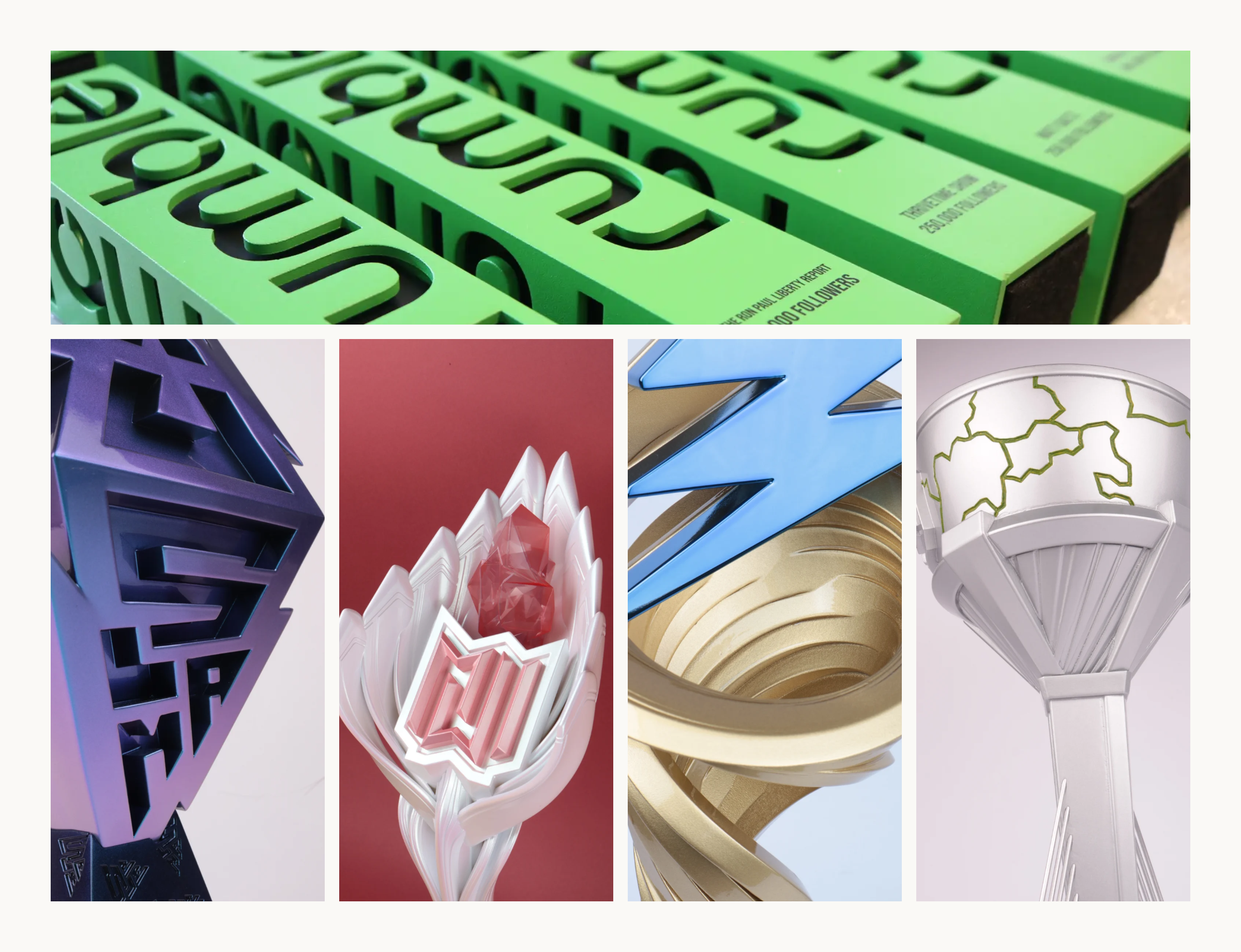
Electroplating is one of several ways to give a piece its final surface, and the right choice depends on the material and the effect. Anodising, by contrast, is an electrochemical process specific to aluminium that grows an oxide layer and can be dyed in colour. Powder coating applies a durable coloured polymer finish. Electroplating uniquely delivers genuine metallic finishes, real gold, silver, nickel or chrome, bonded to the surface. Where a piece needs to look and feel like a specific precious or bright metal, plating is the answer. We often combine plating with engraving or etching, plating a piece and then marking it, or the reverse, for contrast. Finished examples appear on our custom trophies service.
Combining plating with engraving and colour
Electroplating pairs naturally with other finishing techniques. A plated piece can be laser engraved to cut through the coating and reveal a contrasting layer beneath, or engraved first and then plated for a uniform metallic look. Etched recesses on a plated surface can be oxidised or colour filled to add depth and contrast. These layered approaches let us build sophisticated, multi-tone finishes, and deciding on the sequence is part of the design conversation we have with each client.
How Fabit handles electroplating
We manage plating as part of our controlled in-house finishing at the Antwerp workshop, with meticulous preparation and inspection so every piece takes an even, bright, well-bonded finish. We advise on the right plating and base metal for your look and budget, check each finished piece under good light, and ship completed awards worldwide. We respond to every enquiry within 24 hours. To begin your design, visit our online design studio.
Preguntas más frecuentes
Is electroplating real gold or silver?
Yes, the coating is a genuine thin layer of the plating metal, bonded to the base. It gives the true appearance and feel of that metal at a fraction of solid-metal cost.
Will a plated finish tarnish?
Durability varies by metal. Nickel and chrome resist tarnish well; silver and some gold tones may need occasional care. We advise per finish.
Can plated pieces be engraved?
Yes. We can engrave before or after plating, and engraving through the coating can reveal an attractive contrasting layer.
What base metals can be plated?
A range of metals can be plated, with preparation tailored to each. We recommend the best base for the finish you want.
Related terms