

Our planet is our responsibility. That’s why sustainability should be a strategy, not a trend. More brands are asking critical questions about how products are made, where materials come from, and what impact their choices have on the planet. For companies investing in custom awards, that question often becomes: is 3D printing actually sustainable? Or is it just clever marketing?
Let’s break it down.
Less waste by design
Traditional manufacturing methods such as CNC machining or casting are subtractive. You start with a large block of material and remove what you don’t need. The result? Offcuts, scrap, and excess waste.
3D printing (additive manufacturing) works differently. Material is built layer by layer, using only what is required for the design.
For custom awards, where each piece may have a unique geometry, this approach significantly reduces material waste. There’s no need for molds, no mass overproduction, and no surplus inventory.

Fabit
Custom awards, designed and built in house
Fabit designs and produces custom awards for brands, ceremonies and programs. 3D design, in house production and worldwide delivery, with a response within 24 hours.
Smart material choices matter
Not all 3D printing materials are sustainable by default. Some plastics are petroleum-based. However, sustainable innovation in materials is advancing rapidly.
Today, eco-conscious award production can include:
- Recycled polymers
- Bio-based materials
- Lightweight composite structures
- Hybrid combinations with metal, wood, or recycled elements
At Fabit, sustainability is considered from the design phase onward. Smart structural engineering reduces material usage without compromising strength or premium feel. That’s where design expertise makes the difference.
Durability = sustainability
Longevity is one of the most overlooked sustainability factors. What makes a product isn’t just how it’s made – it’s also how long it lasts.
Custom awards are symbolic objects designed to be kept, displayed, and remembered. When an award is crafted with precision and quality, it doesn’t end up discarded after a season. It becomes part of a brand’s legacy.
High-end 3D printing enables:
- Strong internal structures
- Lightweight yet robust forms
- Long-lasting finishes
On-demand production
Traditional trophy manufacturing often requires minimum order quantities and advance forecasting. That leads to overproduction, leftovers, outdated branding, and waste.
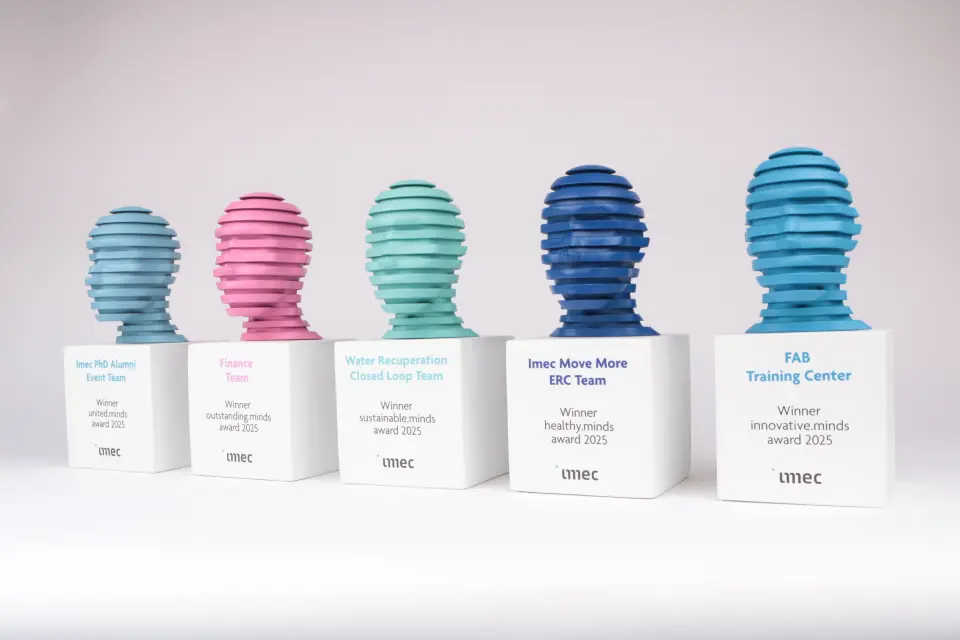
3D printing allows true on-demand production. If you need seven trophies, we print seven trophies. No more. No less.
For events with multiple categories or evolving branding, this flexibility drastically reduces unused inventory.
So… Is 3D printing sustainable?
The honest answer: It can be, when done intentionally.
3D printing is not automatically eco-friendly. But when combined with:
- Smart design
- Responsible material selection
- Local production
- On-demand manufacturing
…it becomes a powerful tool for sustainable innovation.
For brands that care about both impact and aesthetics, additive manufacturing offers a compelling path forward. If you’re exploring eco-conscious custom awards for your next event, let’s talk about how intelligent design and advanced manufacturing can support your sustainability goals without sacrificing premium quality.