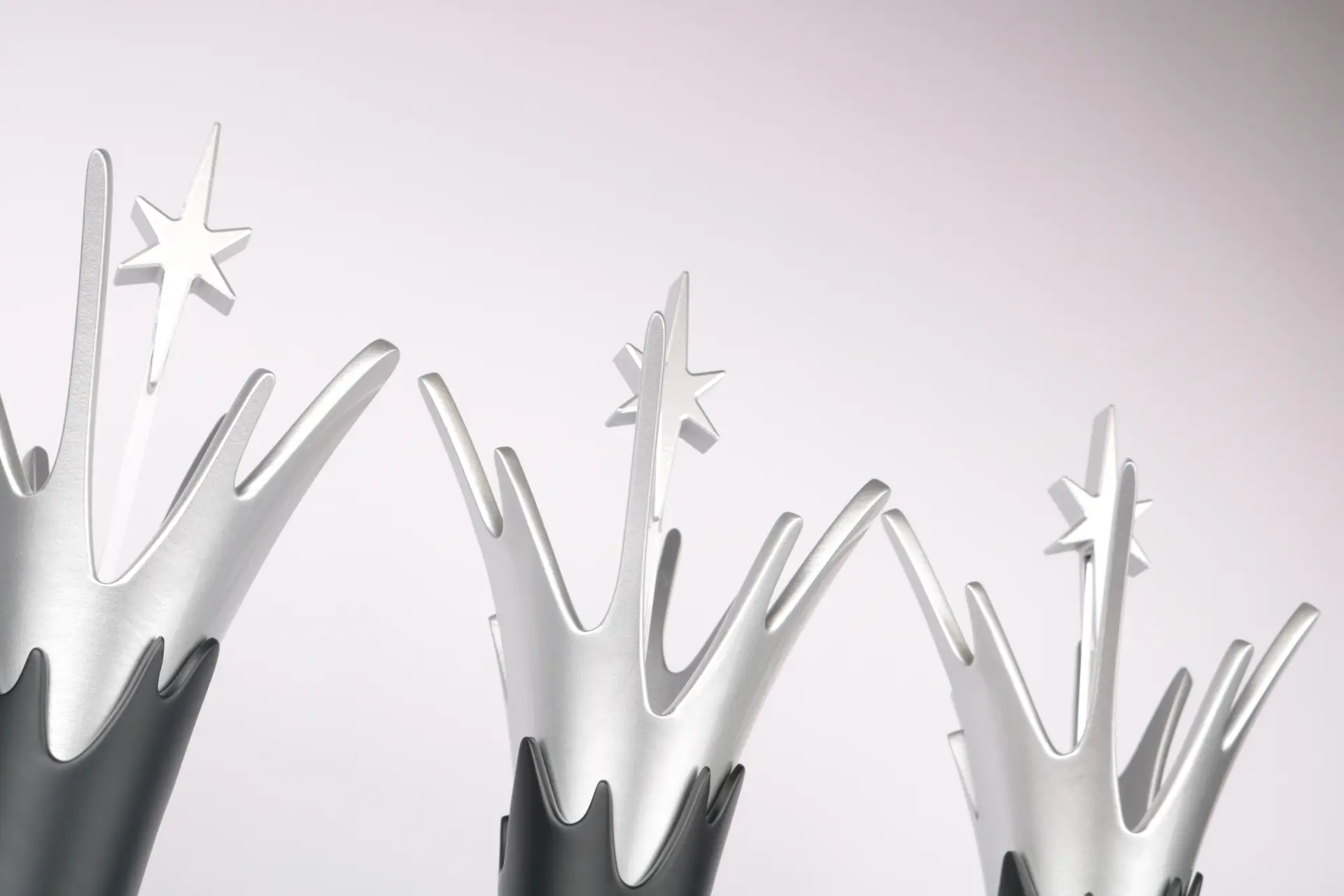
Glas en kristal lijken op een foto bijna identiek. In de hand, op een podium, onder een schijnwerper, zijn het absoluut niet dezelfde objecten. Het verschil is reëel, en er zijn momenten waarop het absoluut de moeite waard is om ervoor te betalen, en momenten waarop dat absoluut niet zo is. Weten welke wat is, is precies waar dit artikel over gaat.
Het korte antwoord: Kristal bevat lood of een loodvervanger die de dichtheid, helderheid en lichtbreking vergroot, waardoor awards meer gewicht, schittering en diepte krijgen. Glas is lichter, betaalbaarder en perfect premium als het goed ontworpen is. Kies voor kristal wanneer het object iconisch moet aanvoelen en tientallen jaren bewaard moet worden; kies voor glas wanneer schaal, budget of een strakkere moderne look belangrijker is.
Wat glas nu werkelijk van kristal onderscheidt
Het technische onderscheid komt neer op de samenstelling. Traditioneel kristal bevat loodoxide, doorgaans meer dan 24 procent, wat de brekingsindex van het materiaal verhoogt. Dat ene kenmerk is de reden waarom kristal het licht breekt zoals het doet. Modern loodvrij kristal bereikt een vergelijkbaar effect met behulp van alternatieven zoals barium of zink, zodat je de schittering krijgt zonder het lood.
Glas daarentegen is op siliciumbasis en heeft een lagere brekingsindex. Het is nog steeds mooi, nog steeds helder, nog steeds in staat om een speciaal ontworpen vorm te behouden. Het buigt licht eenvoudig minder dramatisch en weegt minder in de hand. Geen van beide materialen is in het abstracte beter. Het zijn verschillende gereedschappen voor verschillende opdrachten.
Fabit
Awards op maat, in eigen beheer ontworpen en gemaakt
Fabit ontwerpt en produceert awards op maat voor merken, ceremonies en programma's. 3D-ontwerp, productie in eigen beheer en wereldwijde levering, met een reactie binnen 24 uur.
Gewicht is het eerste dat een winnaar opvalt
Wanneer iemand een award van een tafel optilt, registreert het gewicht zich als eerste. Kristal is dichter van structuur, waardoor een kristallen stuk van dezelfde grootte steviger, serieuzer en duurder aanvoelt. Dat gewicht communiceert waarde zonder dat er een woord wordt gesproken.
Glas voelt lichter en eigentijdser aan. Voor een moderne tech- of designaward kan die lichtheid precies goed zijn. Voor een lifetime achievement-award wint doorgaans het gewicht van kristal. We raden klanten aan om het fysieke gewicht van het object af te stemmen op het emotionele gewicht van het moment.
Helderheid, schittering en hoe licht beweegt
Dankzij de hogere brekingsindex van kristal wordt het licht intenser opgevangen en gebroken. Gegraveerde details, interne 3D-kenmerken en geslepen facetten komen tot uiting met meer sprankeling en diepte. Onder toneelverlichting komt een kristallen award echt tot leven.
Glas is schoon en helder, met een iets zachter, koeler karakter. Het past bij minimale, architecturale ontwerpen waar je helderheid wilt zonder theatrale schittering. Wanneer we een stuk in eigen beheer ontwerpen, kiezen we het materiaal op basis van hoe het zal worden verlicht en waar het komt te staan.
Waar elk materiaal zijn plaats verdient
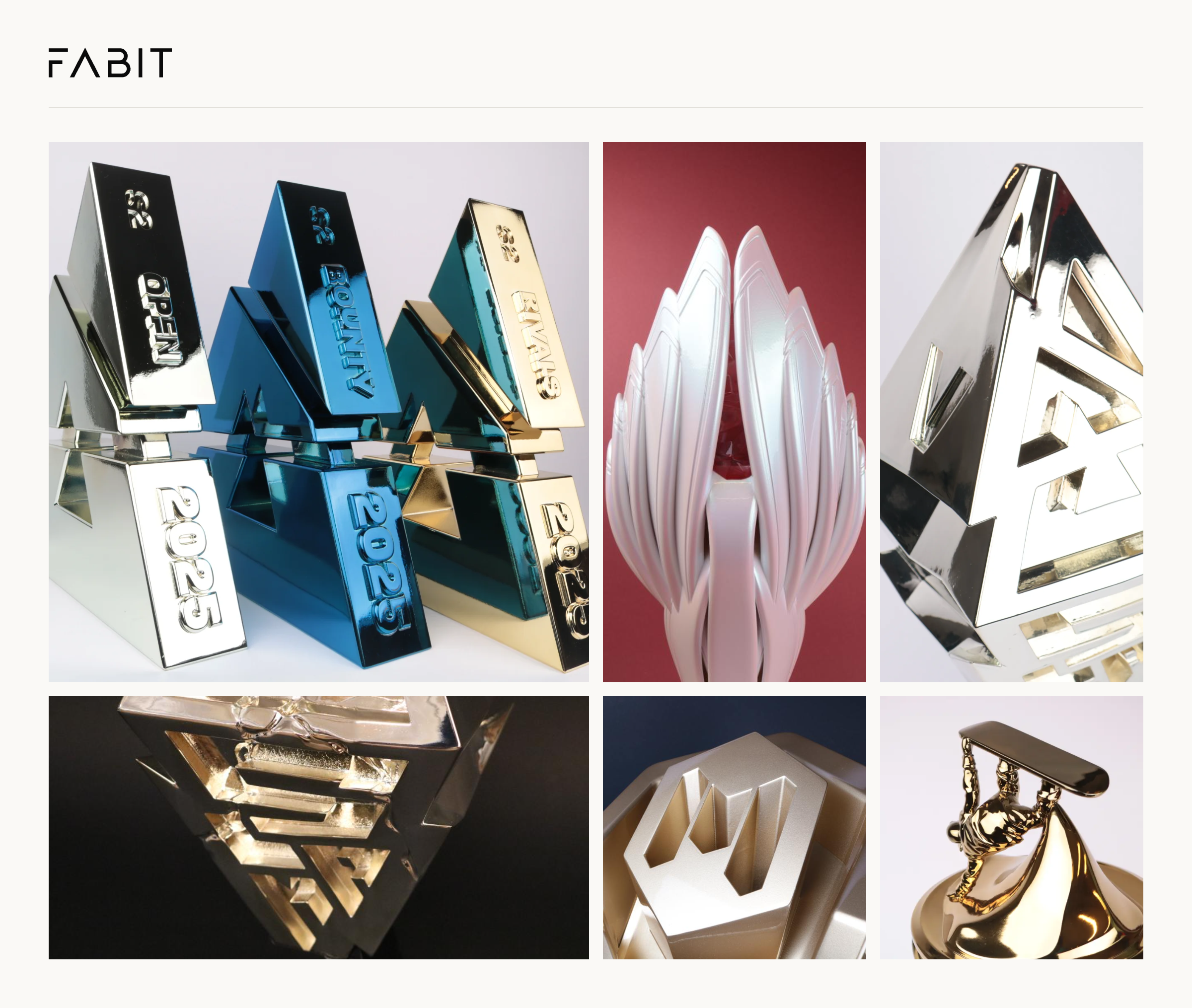
De beslissing hangt meestal af van context, hoeveelheid en intentie. Gebruik dit als richtsnoer:
- Kies kristal wanneer: de award is een prestigieuze topaward, hij wordt tientallen jaren bewaard en tentoongesteld, hij moet iconisch aanvoelen in de hand, of de reputatie van een sponsor staat op het spel.
- Kies glas wanneer: je produceert een grotere oplage, het budget per stuk is belangrijk, het ontwerp is modern en minimaal, of de ontvanger geeft de voorkeur aan eigentijdse terughoudendheid boven klassieke briljantheid.
- Overweeg een combinatie wanneer: je wilt een kristallen middelpunt gecombineerd met metalen of houten accenten, waarbij materialen worden gelaagd voor een kenmerkende look die geen enkele concurrent kan kopiëren.
Kosten en waarom de premie kan worden gerechtvaardigd
Kristal kost meer. De grondstof is duurder en het polijsten en afwerken vragen meer vakmanschap. Die meerprijs koopt dichtheid, schittering en een object dat aanvoelt alsof het van generatie op generatie kan worden doorgegeven. Voor één enkele, bepalende award is dat goed besteed geld.
Glas geeft een verfijnd resultaat tegen een vriendelijkere prijs, wat belangrijk is wanneer u tientallen awards produceert voor een bedrijfsprogramma of een jaargala. Geen van beide keuzes is een compromis op het gebied van kwaliteit. Beide kunnen op maat worden gemaakt, beide kunnen worden gegraveerd, beide kunnen een merk met autoriteit dragen. U kunt ontdekken hoe wij beide vormgeven in onze materialen bereik.
Hoe Fabit het verschil intern ontwerpt
Omdat ons 3D-ontwerp en ons ambachtelijk werk onder één dak plaatsvinden, leveren we niet zomaar glas of kristal. We ontwerpen het stuk rondom het materiaal. Dat betekent dat we modelleren hoe licht door de vorm zal reizen, waar een gravering komt te zitten, en hoe de voet en het lichaam samenwerken als één object.
Deze interne beheersing is ons grootste voordeel. Van het eerste 3D-concept tot de uiteindelijke afwerking, niets wordt uitbesteed en niets wordt aan het toeval overgelaten. Dit is de reden waarom ons werk voor evenementen zoals de Global Champions Tour en partners in de sport, autosport en entertainment standhoudt op de grootste podia. U kunt de diversiteit bekijken in onze casestudies.
Een eenvoudige manier om te beslissen
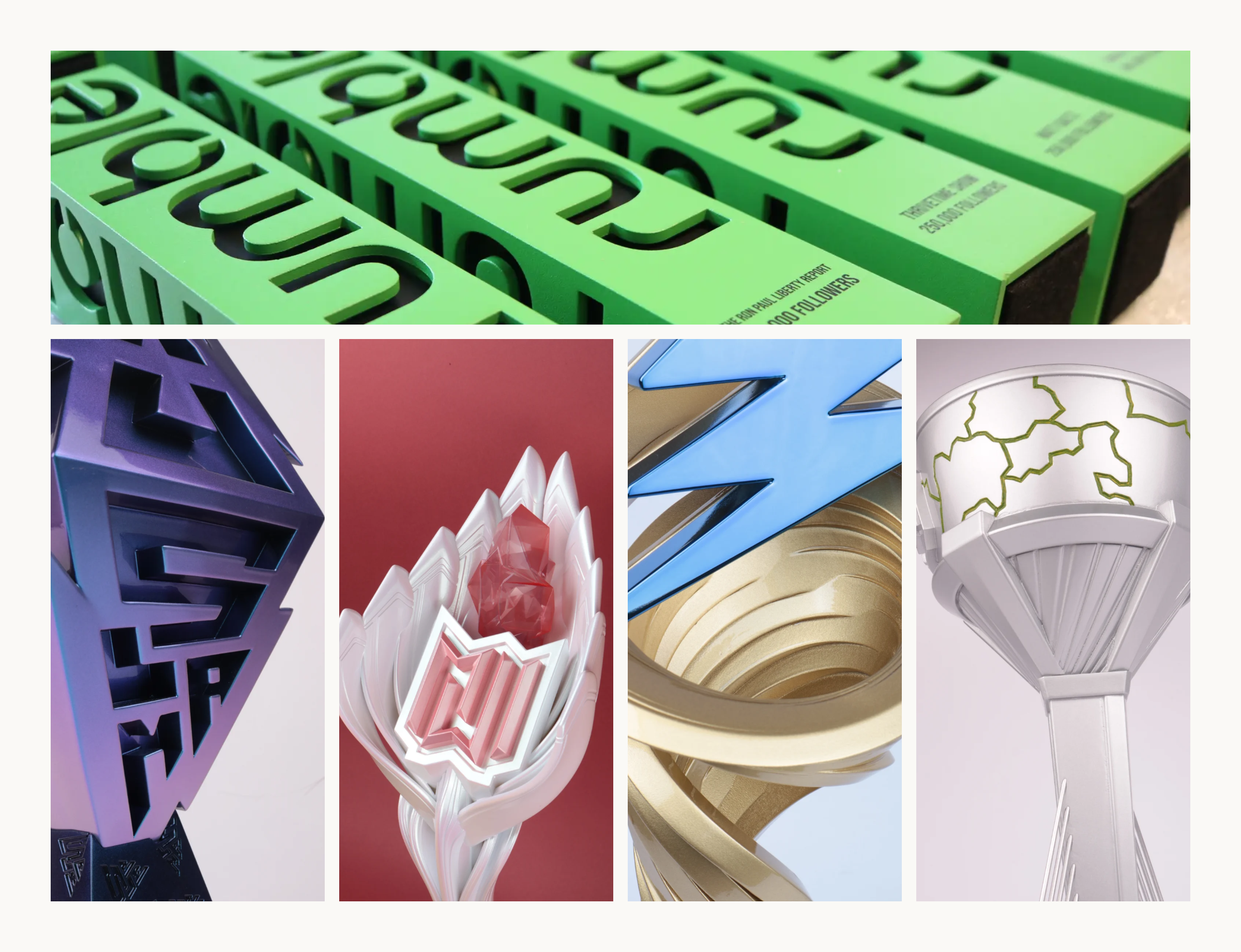
Stel drie vragen. Zal dit stuk tientallen jaren worden bewaard, of is het van het moment? Moet de ontvanger gewicht en schittering voelen, of strakke moderniteit? Is dit één vlaggenschip-award, of een reeks? Uw antwoorden zullen bijna elke keer duidelijk wijzen naar glas of kristal.
Als je het nog steeds niet zeker weet, dan is dat precies het soort gesprek waarvoor wij zijn gemaakt. We kijken naar je evenement, je publiek en je budget, en raden vervolgens het materiaal aan dat het moment het beste dient in plaats van degene met de grootste marge.
Veelgestelde vragen
Is kristal altijd beter dan glas? Nee. Kristal biedt meer gewicht en schittering, maar glas kan de slimmere keuze zijn voor moderne ontwerpen, grotere oplages en krappere budgetten. Het juiste materiaal hangt af van de opdracht.
Kun je zowel glas als kristal graveren? Ja. Beide accepteren lasergravering en subgravering. Kristal laat gegraveerd detail doorr de lichtwerking meestal met meer diepte zien.
Is loodvrij kristal even briljant als traditioneel kristal? Modern loodvrij kristal komt heel dicht in de buurt, waarbij barium of zinc wordt gebruikt om de brekingsindex te verhogen. Het biedt u tegelijkertijd de schittering en de gemoedsrust.
Wat gaat langer mee? Beide gaan generaties lang mee bij redelijk onderhoud. De dichtheid van kristal geeft het een iets steviger, erfstuk-achtig gevoel, maar geen van beide degradeert na verloop van tijd.
Offerte aanvragen
Of uw moment nu vraagt om de schittering van kristal of het heldere zelfvertrouwen van glas, wij ontwerpen en vervaardigen het in eigen beheer in Antwerpen en leveren wereldwijd. Vertel ons over uw evenement en we reageren binnen 24 uur met een aanbeveling en een offerte. Vraag een offerte aan voor uw bekers op maat en laten we het juiste stuk voor dit moment ontwerpen.