
Trophy material guide: how to choose the right material for your award
Choosing the right trophy material is one of the most consequential decisions in the award design process. Material determines how a trophy looks, how it feels in the hand, how durable it is over time, and how much it costs to produce. A material that is well-suited to one context may be completely wrong for another, and the best choice depends on a combination of audience, occasion, budget, and intended meaning.
This trophy material guide covers the main options available to event organizers, brand managers, and procurement teams. Understanding the properties, strengths, and limitations of each material allows you to make a choice that serves both the design and the people receiving the award.
Fabit
Custom awards, designed and built in house
Fabit designs and produces custom awards for brands, ceremonies and programs. 3D design, in house production and worldwide delivery, with a response within 24 hours.
Why material choice matters beyond aesthetics
The material of a trophy does more than determine how it looks. It shapes how the piece is perceived by the recipient, the audience watching the presentation, and anyone who encounters it later on a shelf or desk. Material signals value, intention, and the seriousness with which the awarding organization approaches recognition.
A glass award in an elegant corporate setting communicates refinement and consideration. The same event using plastic trophies, even well-designed ones, sends a different signal entirely. Material is part of the language of recognition, and its selection should be deliberate rather than accidental.
Production method is closely tied to material. Some materials, like hand-blown glass or bronze casting, require specialist craftsmanship and longer lead times. Others, like acrylic, can be machined quickly and at scale. The material you choose determines which production processes are available to you.
Cost is the fourth dimension of material choice. Raw material costs, processing requirements, and the specialist skills involved all contribute to the final price. Understanding the cost implications of each material upfront helps you make a choice that fits your budget without compromising the design’s core intent.
Metal, the enduring standard
Metal trophies have been the default choice for prestigious awards across nearly every domain for centuries, and for good reason. Metal conveys permanence, authority, and craftsmanship in a way no other material quite replicates. Its weight and solidity communicate value before any design details are even registered.
Zinc alloy, commonly die-cast and then plated in gold, silver, or bronze finishes, is the most widely used metal in trophy production. It allows for complex shapes and fine surface detail at relatively accessible cost. The plating process gives enormous flexibility in final color and finish.
Aluminium offers a lighter alternative with excellent machinability. It is well-suited to contemporary designs with clean lines and precise detail. Aluminium can be anodized in a range of colors, making it a versatile choice for awards that need to incorporate specific brand colors.
Stainless steel and solid bronze sit at the premium end of metal trophy production. Both materials are heavier, more expensive, and require more specialist processing, but they produce pieces of exceptional quality and longevity. For flagship awards where the material needs to match the prestige of the occasion, these are the options to consider.
Glass and crystal, elegance and light
Glass and crystal awards occupy a distinct visual and cultural space in the world of recognition. Their interaction with light, the way they refract, reflect, and transmit it, creates a luminosity that no other material achieves. This quality makes them a natural choice for awards that need to feel special and considered.
Optical crystal is the premium standard in this category. It is produced to very tight specifications, resulting in a material that is exceptionally clear, heavy, and responsive to cutting and polishing. Crystal awards catch and scatter light in ways that make them stand out in any setting.
Glass, while less dense than crystal, offers similar visual appeal at a lower price point. Techniques like sandblasting, acid etching, and UV printing allow glass to carry complex designs with precision. Colored glass expands the palette of options considerably, though it reduces the transparency that gives clear glass and crystal their distinctive character.
The primary limitation of glass and crystal is fragility. Both materials are vulnerable to chipping and shattering if dropped or handled carelessly. Shipping requires robust protective packaging. For events where trophies will be transported frequently or displayed in high-traffic environments, this vulnerability is a practical consideration.

Acrylic, versatility and visual impact
Acrylic has transformed award design over the past two decades. Its combination of optical clarity, light weight, ease of machining, and relatively low cost makes it one of the most practically versatile materials in the industry. Modern acrylic pieces can achieve a level of visual sophistication that would have seemed impossible from a synthetic material a generation ago.
Clear acrylic mimics the appearance of glass and crystal at significantly lower cost and weight. For awards programs requiring larger quantities without proportionally larger budgets, acrylic provides a credible alternative that photographs well and displays attractively.
Color acrylic opens up design possibilities that are harder to achieve in glass or metal. Vivid, consistent color throughout the body of the piece, available in a very wide palette, creates visual impact that is particularly effective for event-branded awards or trophies aligned with specific team or brand identities.
Laser cutting and CNC routing allow precise, complex shapes to be machined from acrylic sheet rapidly and at scale. This makes acrylic particularly well-suited to contemporary geometric designs. Internal color printing, captured between layers of clear acrylic, adds depth and visual complexity that is unique to this material.
Wood, warmth and sustainability
Wood brings a natural warmth to trophy design that synthetic and mineral materials cannot replicate. Its grain, texture, and variation give every piece a degree of individuality. For awards that are meant to feel personal and considered rather than institutional and uniform, wood is a powerful choice.
Hardwoods like walnut, oak, cherry, and maple are the most commonly used species in award production. Each has a distinct visual character. Walnut’s deep, rich tones read as sophisticated and refined. Oak’s pronounced grain gives a more robust, heritage feel. The right species depends on the intended aesthetic and the design context.
Natural wood awards pair particularly well with sustainability messages. As environmental credentials become more important to organizations commissioning recognition programs, a well-crafted wooden award signals alignment with those values in a tangible way. Sustainably sourced or reclaimed wood takes this a step further.
Wood’s limitation is dimensional variability. As a natural material, it responds to humidity and temperature changes over time. For precision-machined components or awards with very tight tolerances, this movement needs to be accounted for in the design. Proper sealing and finishing significantly reduces this effect, but it does not eliminate it entirely.
Resin, flexibility for complex forms
Resin casting is a production method that enables shapes and forms that are difficult or impossible to achieve with other materials. It is particularly well-suited to organic, sculptural designs where the complexity of the form is central to the award’s identity. High-quality resins can be remarkably clear, deeply colored, or made to incorporate materials like metal, wood, or stone.
The weight and appearance of resin can be adjusted significantly through formulation. Clear resins can simulate glass or crystal. Opaque resins can be produced in any color with a wide range of surface textures. The material is versatile enough to serve as the primary aesthetic of a piece or as a component within a larger design.
Resin does not carry the same cultural associations as metal, glass, or crystal, which can be both an advantage and a limitation. In contexts where convention is less important and creative freedom is valued, resin’s flexibility is a genuine asset. In more traditional award categories, it may not project the gravitas that those occasions demand.
Durability varies depending on the resin formulation and the quality of the curing process. High-quality cast resin pieces are robust and long-lasting. Lower-grade resin can yellow or become brittle over time, which is a risk for awards intended as lasting keepsakes. Specify UV-resistant formulations for pieces that will be exposed to direct light.
Combining materials for design richness
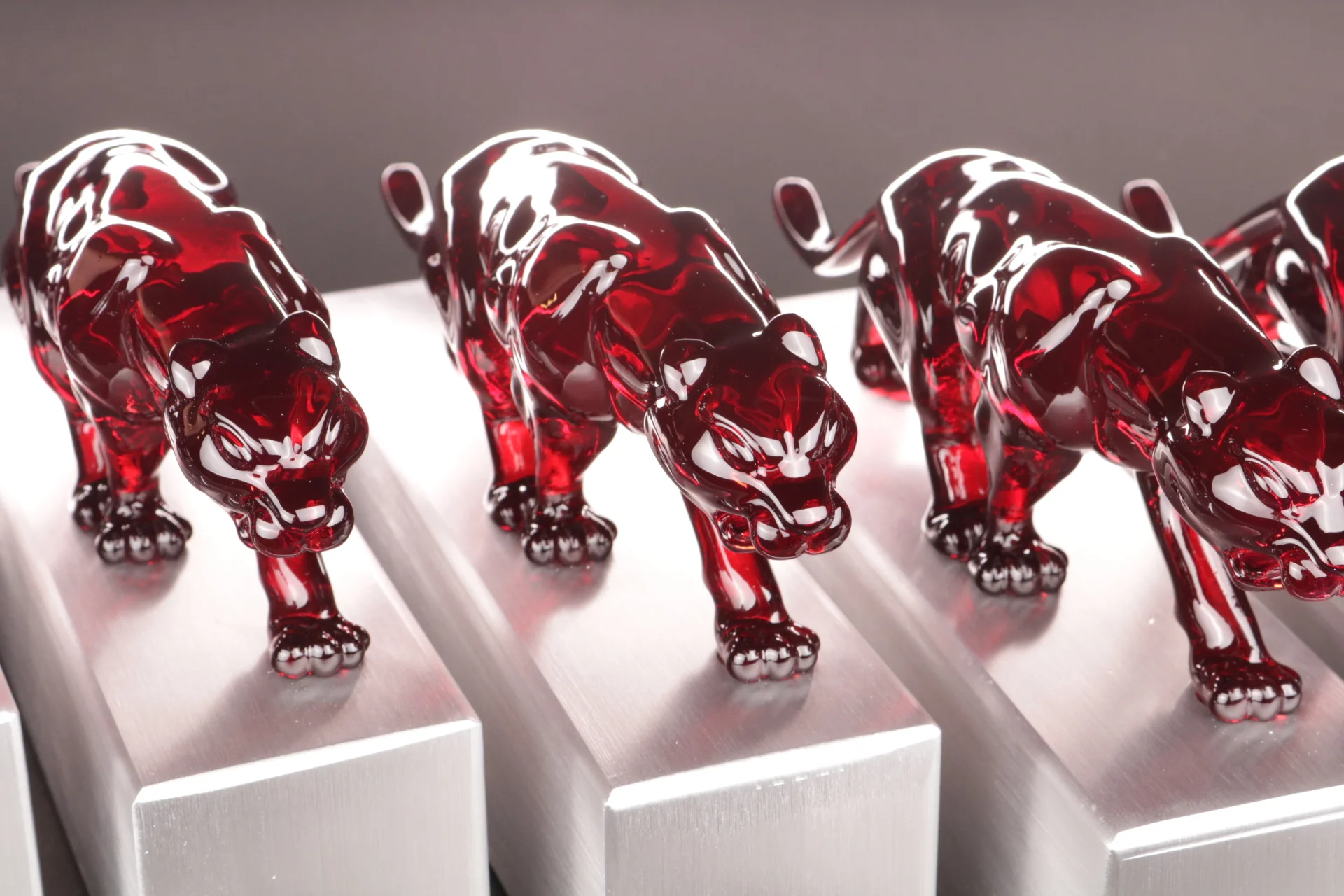
Some of the most effective trophy designs combine two or more materials, using the specific properties of each to serve different parts of the piece. A metal base paired with a glass or crystal body brings the solidity and stability of metal together with the luminosity of glass. Wood and metal combinations leverage the warmth of natural material against the precision of engineered finishes.
Material combinations require more careful engineering than single-material designs. The different expansion rates of dissimilar materials, the methods used to join them securely, and the visual transitions between materials all need to be considered during the design phase.
Weight distribution is particularly important in multi-material designs. A heavy top element on a light base creates instability. A design that looks visually balanced in a render may feel physically awkward when the density differences between materials translate into real weight distribution.
Successful material combinations typically have a clear logic. Each material is used because it does something the other cannot: wood for warmth and texture, metal for structural detail, glass for transparency and light interaction. When each material earns its place in the design, the combination feels intentional rather than arbitrary.
Matching material to context and audience
Corporate award programs tend to favor glass, crystal, and premium metal. These materials read as considered and professional across most business contexts. They also age well and look credible displayed in office environments over the long term.
Sports trophies traditionally use metal as the primary material, with dimensional figurines, engraved plaques, and bold metallic finishes. The weight and permanence of metal reinforces the gravity of competitive achievement. For major championship pieces, the choice of material is part of the trophy’s identity.
Esports and gaming events increasingly favor bold, contemporary materials. Acrylic, with its ability to carry vivid colors and create dramatic lighting effects when backlit, has become strongly associated with the visual language of gaming culture. Custom shapes that reference in-game elements or genre aesthetics work particularly well in this material.
Recognition programs in sustainability-focused organizations are increasingly choosing natural materials, wood, stone, or responsibly sourced alternatives to traditional materials, as a deliberate signal of values alignment. When the material itself communicates something meaningful about the organization, it adds a layer of intent that recipients notice.
Budget considerations by material
Material cost is not always proportional to visual impact, but it is an important planning variable. Acrylic is among the most cost-effective materials per unit for custom awards. Metal varies significantly depending on the alloy and surface treatment. Glass and crystal sit at a higher price point due to material cost and specialist processing requirements.
Volume affects per-unit cost significantly. Materials that require tooling, like die-cast metal, have high setup costs that are amortized over larger quantities. For small quantities, a machined or 3D-printed approach may be more economical even if the per-unit manufacturing cost appears higher.
Do not evaluate material cost in isolation. Packaging, personalization, and shipping costs interact with material choice. A heavier material costs more to ship. Fragile materials require more protective packaging. These additional costs should be factored into the total budget calculation from the outset.
The relationship between budget and perceived value is not strictly linear. A beautifully designed acrylic award with thoughtful personalization and premium packaging can feel more valuable than a poorly designed metal piece of similar cost. Material provides the raw potential for quality; design and execution determine how that potential is realized.

Environmental and sustainability considerations
As sustainability becomes a more central concern for organizations of all kinds, the environmental profile of trophy materials is receiving more scrutiny. Some traditional materials involve energy-intensive extraction and processing. Others offer significant environmental credentials that align with organizational values and reporting requirements.
Wood from sustainably certified sources, FSC-certified timber, for example, is one of the most straightforward choices for organizations prioritizing environmental responsibility. It is a renewable material when sourced responsibly, biodegradable at end of life, and carries strong positive associations.
Recycled metals and recycled acrylic are increasingly available as production inputs. Using recycled content does not necessarily compromise quality, and for organizations where supply chain sustainability is part of their reporting, these options provide verifiable environmental benefit.
The durability of the material also has an environmental dimension. An award designed to last a lifetime generates far less waste than one that degrades or falls apart within a few years. Specifying high-quality materials and production processes is itself a sustainability choice, even when made with purely aesthetic intent.
Making the final material decision
With so many variables at play, how do you arrive at the right material choice? A structured approach helps. Start with the non-negotiable requirements: budget ceiling, quantity, timeline, and any organizational values or sustainability commitments that affect the choice. This eliminates options that are not viable before you begin weighing preferences.
Next, consider the audience and the occasion. Ask what the material needs to communicate: prestige, warmth, energy, sustainability, heritage, innovation. Match these requirements to the properties of each material. If more than one material meets your criteria, evaluate design flexibility, production timeline, and total cost to identify the best fit.
When possible, evaluate physical samples before making a final decision. Material qualities, weight, texture, surface character, are very difficult to assess accurately from photographs or descriptions. Most manufacturers can provide material samples or examples of finished pieces in different materials for comparison.
The best material choice is the one that serves the design, the recipient, and the occasion simultaneously. There is no universal answer, but a clear understanding of your requirements and the properties of each option makes the decision considerably more straightforward.
Material decisions that shape lasting awards
Trophy material selection deserves the same care and attention as any other element of the award design process. The material is not just a production decision, it is a statement about what the award represents and how much consideration has gone into the recognition it embodies.
Organizations that approach material choice with intention consistently produce awards that recipients value and display with pride. The right material, combined with good design and quality production, creates a piece that carries the weight of the achievement it commemorates for years to come.