How to design a custom trophy that stands out and lasts
Designing a custom trophy is about much more than choosing a shape and a material. The best trophies carry meaning, reflect the values of the event or organization behind them, and give recipients something they genuinely want to display. Whether you are planning a sports championship, a corporate recognition program, or an industry award, the design process shapes how the final piece communicates achievement.
Getting the design right takes planning. It requires clarity about who the trophy is for, what it should represent, and how it will be made. This guide walks through the key decisions involved, from concept to finished product.
Fabit
Custom trophies, engineered in 3D
Fabit designs and produces fully custom trophies for brands and global events. 3D design, in house production in Antwerp and worldwide delivery, with a response within 24 hours.
Start with the purpose and the recipient in mind
Before sketching anything, define what the trophy is meant to represent. Is it celebrating athletic performance, business excellence, long service, or creative achievement? The answer shapes every design decision that follows. A sports award for a youth league calls for something very different from a deal trophy handed to a senior executive.
Consider who will receive the trophy and where it will likely end up. Trophies displayed in homes tend to favor elegant, compact designs. Awards destined for office shelves often benefit from a more architectural look. Desk-sized pieces need to be practical as well as impressive.
The occasion itself also matters. A one-off award for a major milestone justifies greater investment in materials and complexity. An annual award given across many categories calls for a design that can scale efficiently without losing quality or distinctiveness.
Finally, think about longevity. A trophy that looks sharp today but feels dated in three years is a missed opportunity. Timeless design principles, clean lines, quality materials, and thoughtful proportions, age far better than trend-driven novelty.
Define the key design elements
Once you have clarity on purpose and audience, start working through the core design components. The base, body, and any figurative or symbolic elements each contribute to the overall effect. Getting these proportions right is critical. An oversized base can make a trophy look clumsy; one that is too small creates instability.
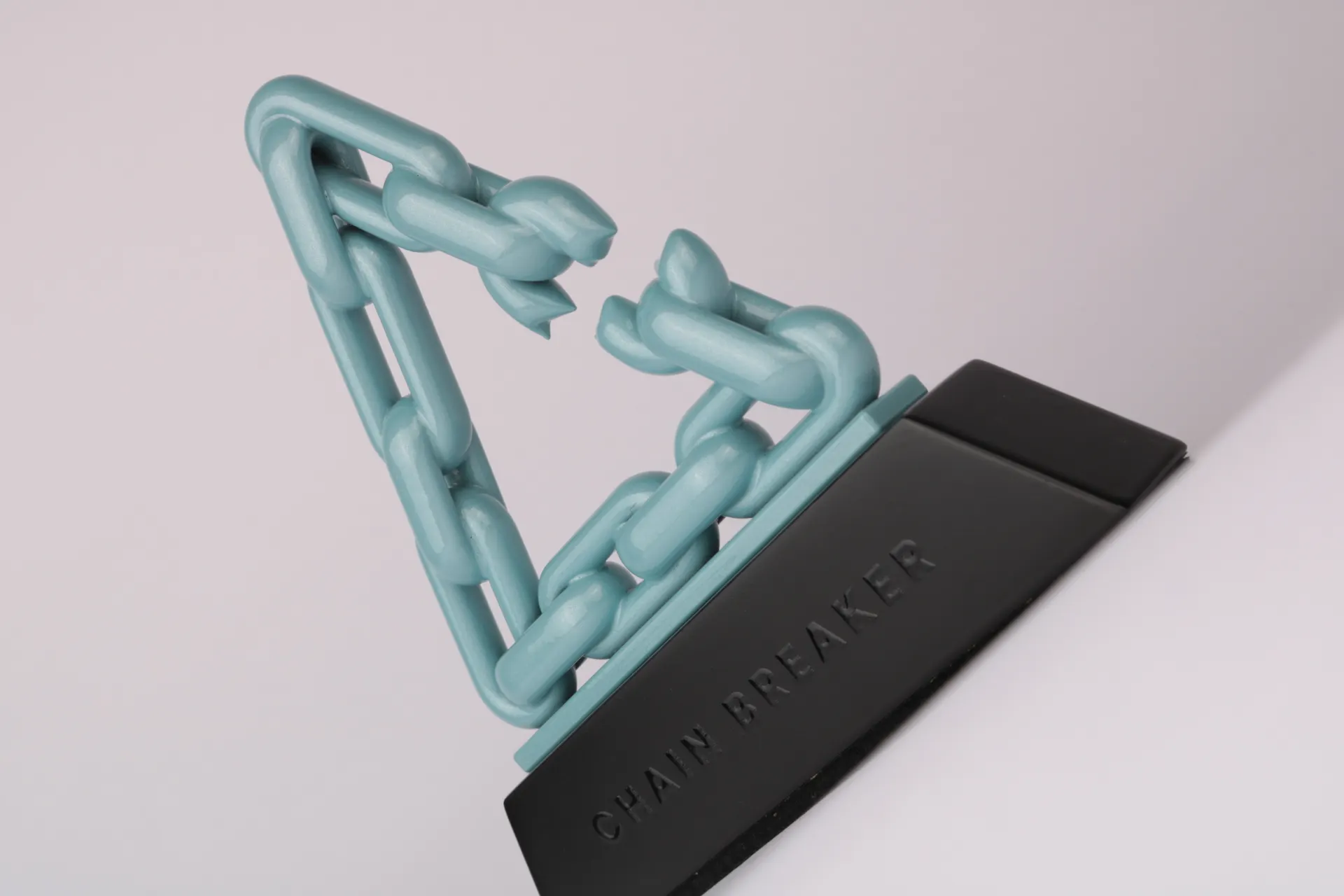
Shape is one of the most expressive tools in trophy design. Towers and columns convey authority. Organic or curved forms feel more approachable and modern. Abstract shapes open up possibilities for storytelling through form, particularly when the design references the industry or sport being recognized.
Color and finish add another layer of meaning. A brushed metal surface reads as understated and professional. High-gloss acrylic in a bold color projects energy and excitement. Natural wood brings warmth and sustainability associations. These are not cosmetic choices, they affect how the award is perceived.
Typography on the trophy, including the event name, recipient name, and year, needs to be legible and proportionate. Engraved, printed, or embossed text each has different longevity and visibility characteristics. Plan for how and where text will appear from the earliest design stages.
Work with sketches and references before committing
Even if you have no design background, gathering visual references is a practical and powerful starting point. Collect images of awards you admire, architecture, sculpture, logos, or anything that captures the feeling you are aiming for. This gives a trophy manufacturer something concrete to work with and reduces the risk of misunderstandings.
Rough sketches, even hand-drawn ones, are valuable. They force you to make decisions about proportions, orientation, and the relationship between elements. A sketch does not need to be polished to be useful; it just needs to communicate intent clearly enough for a designer or manufacturer to respond.
If you are working with a design agency or a manufacturer with in-house design capability, share your brief and references before they begin. The more context they have, the more useful their first concepts will be. Avoid vague language like “modern” or “premium” without visual examples to anchor those words.
Revision rounds are part of the process. Build time for at least two or three rounds of feedback into your project timeline. Rushing the design phase often leads to compromises that show up in the final piece and are impossible to fix once production begins.
Choose a material that fits the design and the budget
Material choice is closely tied to both aesthetics and cost. Metal, glass, crystal, acrylic, wood, and resin each have distinct visual properties, production requirements, and price points. A design that works beautifully in crystal may look very different translated into acrylic, and vice versa.
Metal trophies offer durability and a sense of permanence that resonates in many contexts. Zinc alloy, aluminium, bronze, and stainless steel all behave differently in terms of casting complexity, surface finish, and weight. Metal is often chosen for its perceived value and longevity.
Glass and crystal communicate elegance and are frequently used for corporate and finance sector awards. They are heavier than acrylic, respond beautifully to light, and convey a premium feel. The trade-off is fragility during shipping and higher costs for complex shapes.
Acrylic allows for bold shapes, vivid colors, and relatively fast production. It is lighter than glass, cheaper to produce in quantity, and can be machined to precise tolerances. It is a practical choice for events requiring a larger number of identical trophies without sacrificing visual impact.
Consider how the trophy will be made
Understanding the manufacturing process helps you design something that is actually producible. Some shapes look striking on screen but present significant challenges in production. Overhangs, undercuts, and extremely thin sections can all cause problems depending on the production method.
Traditional trophy manufacturing involves casting, machining, and hand-finishing processes that have been refined over many decades. These methods excel at producing detailed figurative elements, complex metalwork, and high-volume runs of consistent quality. Lead times for traditional manufacturing are typically longer.
3D printing opens up shapes that are difficult or impossible to achieve through conventional means. It allows for rapid prototyping, so you can evaluate a physical model before committing to full production. This is particularly useful for unique, one-off pieces where getting the proportions exactly right matters.
Hybrid approaches are increasingly common. A trophy might combine a 3D-printed core with metal plating, or a laser-cut acrylic panel set into a wooden base. Knowing what each process is capable of, and its limitations, allows you to design with confidence rather than hoping something will work.
Get a physical prototype before full production
For any significant award, commissioning a physical prototype is money well spent. Renders and 3D models are useful tools, but they do not capture weight, texture, or the way a piece sits in the hand. A prototype lets you identify problems that are invisible on screen.
Check proportions carefully when the prototype arrives. Something that looks balanced in a render can feel top-heavy or awkward in reality. Weight distribution matters for display stability, particularly for taller trophies. A piece that tips over easily is a practical problem as well as an aesthetic one.
Surface finish is also much easier to evaluate on a physical sample. Lighting conditions in a render are controlled; real-world lighting varies. Run a prototype past several people whose opinions you trust before signing off on production. Different observers notice different things.
Document any changes clearly and in writing. When revisions are discussed verbally, details get lost. Written feedback with references to specific parts of the design, using annotated images where possible, gives the manufacturer an unambiguous brief for the next version.
Plan personalization from the start
Many trophies require individual personalization: recipient names, dates, category titles, team names. If personalization is part of the plan, design for it from the beginning. Adding text as an afterthought often results in awkward placement or a font that clashes with the rest of the piece.
Engraving is the most durable personalization method. It is permanently part of the material and does not fade or peel. It works best on metal, glass, and some acrylics. The depth and style of engraving affect legibility, particularly on curved or reflective surfaces.
Printed personalization using UV printing or pad printing allows for more complex graphics, color, and finer detail. It is faster and cheaper for large quantities, but the long-term durability depends on the coating and the conditions in which the trophy will be kept.
Plates and inserts offer a practical solution when the recipient details are not confirmed until shortly before an event. A generic trophy with a customizable plate gives you flexibility without requiring a fully custom production run for each individual award.
Account for packaging and logistics
A beautifully designed trophy that arrives damaged is a failure regardless of how well it was made. Packaging is part of the design process and deserves serious attention, particularly for fragile materials like glass and crystal.
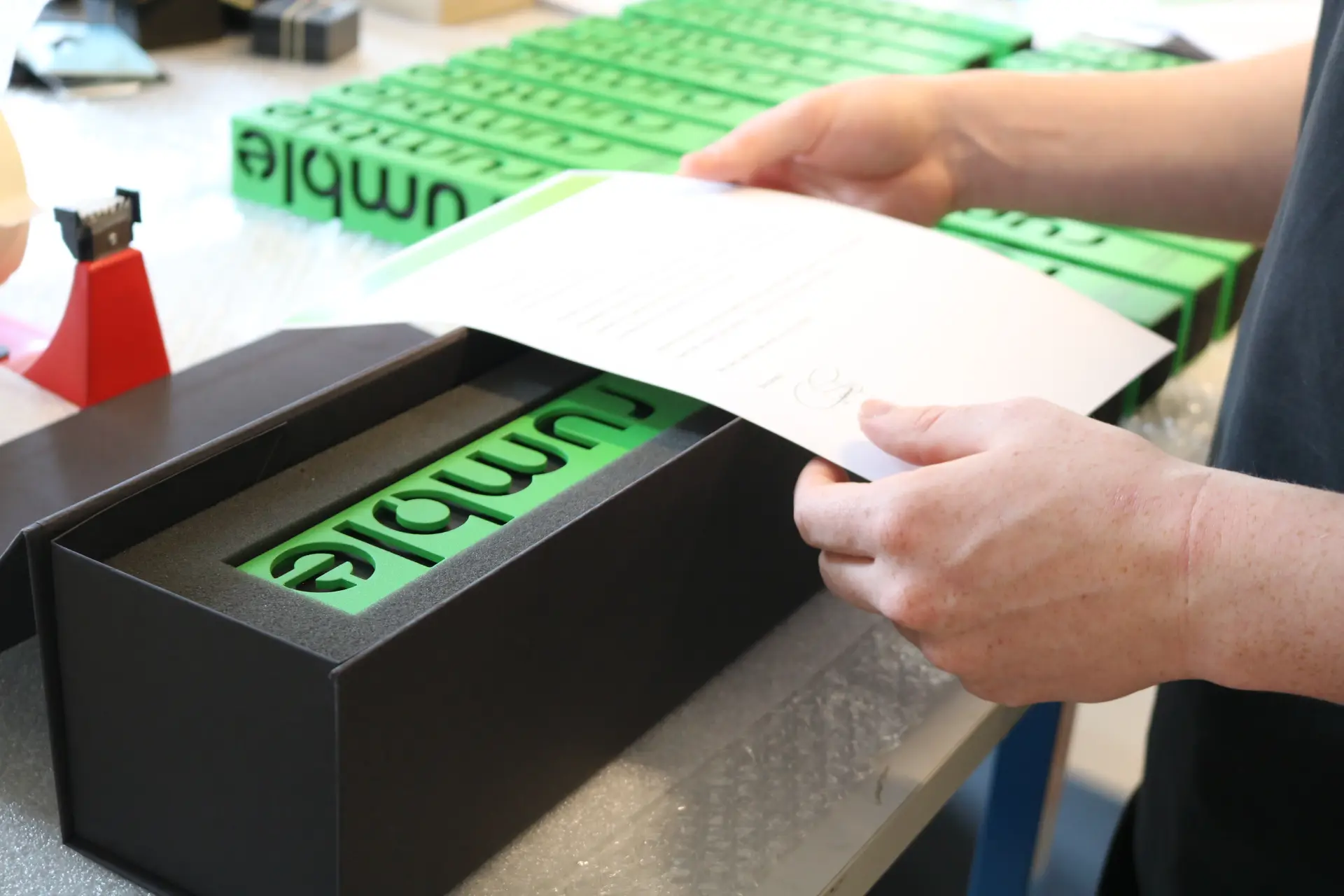
Custom foam inserts molded to the shape of the trophy protect against impact during transit. Generic bubble wrap is not sufficient for high-value pieces. If the packaging will be seen by the recipient, for example, in an unboxing situation, branded or premium packaging adds to the overall impression.
Consider shipping weight when designing the trophy. Heavier trophies cost more to ship and are more likely to cause damage if they shift during transit. For international deliveries, weight and fragility are significant cost drivers that can affect the overall budget.
If trophies are being distributed to recipients at different locations, logistics planning needs to happen alongside the design process. Some manufacturers offer direct distribution services, which simplifies coordination considerably when dealing with multiple shipping destinations.
Understand the timeline realistically
Custom trophy production takes time, and that time is rarely as flexible as clients hope. Typical production timelines for bespoke awards range from four to twelve weeks depending on the complexity of the design, the materials involved, and the manufacturer’s current capacity.
Design approval is usually the longest phase of the process. Multiple revision rounds, stakeholder sign-off, and procurement approvals all add time. Building in buffer at the design stage is far more effective than trying to compress production at the end.
Rush orders are possible with some manufacturers, but they usually carry a significant cost premium and may require compromises on finish quality or design complexity. Commissioning trophies well in advance of your event avoids this pressure entirely.
If your event has a fixed date, as most do, work backwards from that date to establish your commissioning deadline. Factor in shipping time, particularly for international orders. A delivery date that leaves no margin for error is a risk that good planning can eliminate.
Brief the manufacturer clearly and completely
A clear brief is the single most important factor in getting the result you want. Manufacturers work from what they are told. Vague briefs produce vague results. A strong brief covers the purpose, the audience, the visual direction, the materials, the quantities, the personalization requirements, and the timeline.
Include references generously. Images of awards you admire, materials that inspire the design, and examples of what you want to avoid all help the manufacturer understand your thinking. The goal is to minimize assumptions on their part and surprises on yours.
Agree on how revisions will be handled before work begins. How many rounds are included in the price? What format will design files be shared in? Who is the primary point of contact on each side? Clarity on process prevents friction later.
Ask for a sample or prototype schedule at the briefing stage. Knowing when you will see each deliverable, concept sketches, 3D render, physical prototype, pre-production sample, keeps the project on track and gives you natural checkpoints to course-correct if needed.
Review quality carefully before final approval
The pre-production approval stage is your last opportunity to catch and fix problems before the full run is manufactured. Treat it seriously. Compare the sample against your brief point by point, not just your general impression.
Check engraving or printing quality under different lighting conditions. Review the finish consistency across all surfaces. Confirm that the weight feels appropriate. If multiple units will be produced, ask to see more than one sample to verify consistency between pieces.
Involve the right stakeholders in this review. If a senior leader will be presenting the award, their input at this stage is valuable. If the recipient community has expectations about what the award looks like, factor that into your evaluation.
Be specific in your approval or your requests for change. “Looks good” is not a useful sign-off if problems emerge later. Written confirmation of what has been approved, with reference images, creates a clear record that protects both parties.
A design process worth the effort
Designing a custom trophy is a process that rewards careful thought at every stage. The decisions made early, about purpose, audience, materials, and manufacturing method, determine whether the finished piece genuinely reflects the achievement it is meant to celebrate. There are no shortcuts that deliver the same result as thorough planning and clear communication throughout.
The trophies that endure in recipients’ memories, and on their shelves, are the ones built with genuine attention to craft and meaning. Understanding the design process from start to finish puts you in the strongest position to commission something that achieves exactly that.