Designing awards that feel expensive (even before you touch them)
Designing awards that feel luxurious at first glance is a matter of craftmanship. Materials, finishes and form define how a custom trophy is perceived.
When someone receives an award, the experience starts the moment they see it. That first impression, often formed in seconds, determines whether an award feels premium, meaningful, and worthy of the achievement it represents… or like just another object. Designing awards that feel expensive and valuable is a craft in and of itself – it requires knowledge, experience, vision and expertise.
At Fabit, we believe that truly exceptional awards don’t just look good. They communicate value instantly. Here’s how thoughtful design choices can make an award feel luxurious, even before you’ve actually touched it.
1. Visual weight: designing for perceived value
Heaviness is often associated with quality – but before physical weight comes visual weight.
An award that feels expensive tends to have:
A solid, grounded base
Balanced proportions
A clear sense of stability
Thin, overly delicate structures can unintentionally feel cheap or temporary. By contrast, designs that appear anchored and substantial immediately signal durability and importance.
Even in lightweight materials, smart geometry can create the illusion of mass.
Fabit
Custom trophies, engineered in 3D
Fabit designs and produces fully custom trophies for brands and global events. 3D design, in house production in Antwerp and worldwide delivery, with a response within 24 hours.
Different materials carry different emotional and visual cues.
Metal suggests strength, prestige, and permanence
Glass and acrylic can feel refined and precise, but require careful finishing
Stone or composites evoke timelessness and exclusivity
The key isn’t just the material itself, but how it’s used. A premium award often combines materials in a way that creates contrast and depth, rather than relying on a single flat surface.
Material choice is storytelling.
3. Surface finish: where luxury lives
Finish is one of the most powerful (and often underestimated) drivers of perceived value.
Consider the difference between:
Matte vs. high-gloss
Brushed vs. polished metal
Raw vs. coated surfaces
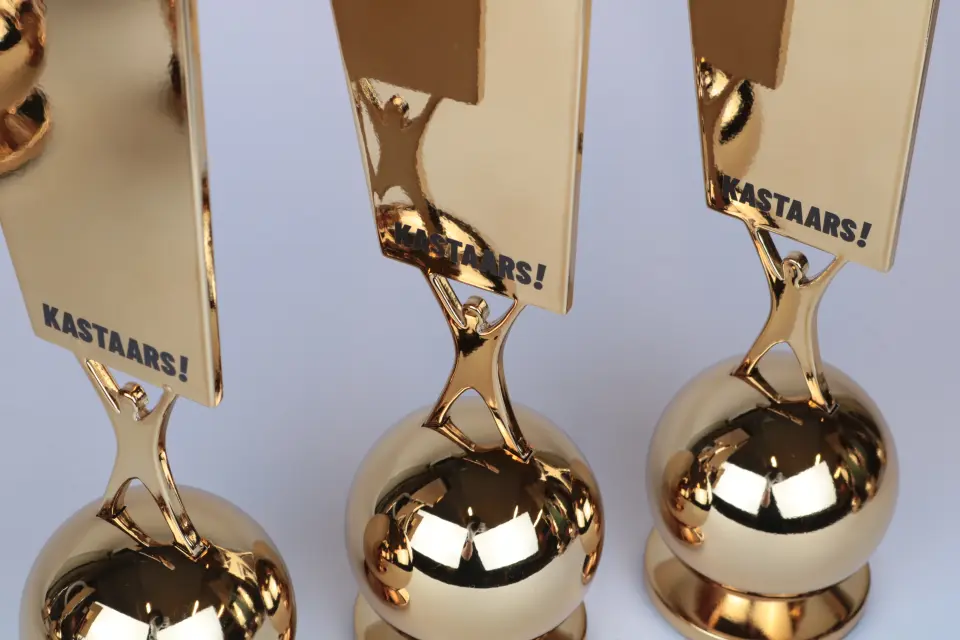
Premium finishes diffuse or reflect light in controlled ways. They feel intentional. Refined. Complete.
Techniques like anodizing, powder coating, or even gold leaf application can dramatically elevate a design – without changing its core structure.
4. Precision & detailing: the subconscious signal
People may not consciously notice precision – but they always feel it.
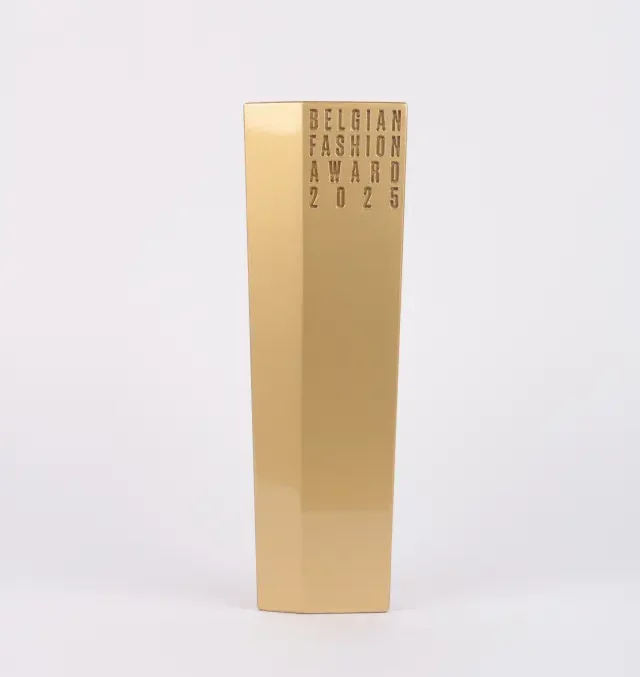
Clean edges, seamless joins, and sharp engravings signal craftsmanship. On the other hand, visible glue lines, rough transitions, or inconsistent detailing immediately reduce perceived value.
High-end awards often feature:
Tight tolerances
Hidden assembly methods
Crisp typography and engraving
It’s these subtle details that separate “nice” from “exceptional.”
5. Contrast & layering: creating depth
Flat designs rarely feel premium.
Luxury objects tend to have depth – both physically and visually. This can be achieved through:
Layered components
Contrasting finishes or materials
Shadow lines and spacing
By introducing dimension, you create a more dynamic object that draws the eye and invites closer inspection.
6. Restraint in design: less, but better
One of the most common misconceptions is that “more” equals “better.”
In reality, premium design is often defined by restraint.
Overloading an award with logos, text, or decorative elements can dilute its impact. A well-designed award knows what to leave out.
Clear hierarchy, thoughtful spacing, and a focus on one strong concept often result in a more luxurious feel.
7. Consistency with brand identity
An award doesn’t exist in isolation – it represents a brand.
A premium award aligns seamlessly with the brand’s identity:
Colors match precisely
Finishes reflect the brand tone (bold, understated, innovative…)
The overall design feels intentional and cohesive
When there’s alignment, the award becomes an extension of the brand experience – not just a standalone object.
Conclusion: perception is designed
An award doesn’t need to be extravagant to feel expensive – but it does need to be intentional.
From material selection and finish to proportions and detailing, every design decision contributes to how an award is perceived in that crucial first moment.
Because in the end, the most powerful awards don’t just celebrate achievement. They elevate it.
Crafting trophies for the world's biggest events.
Get the full lookbook.
We create bespoke championship trophies for global events, esports tournaments and leading brands. Designed in-house, engineered with precision and crafted to stand out on the world stage. Drop your email and download the complete lookbook.
Esports & Gaming, Sports & Corporate trophies
In-house 3D printing, metal, wood & sustainable finishes