
Acrylic
Acrylic offers clarity, versatility and modern precision within trophy and award design. It enables layered construction, integrated color and sharp detailing while maintaining structural stability. From transparent statement pieces to bold branded compositions, acrylic balances visual lightness with engineered control.
Why acrylic creates visual depth
Acrylic performs differently because it interacts with light. Transparency, edge reflection and layered construction create depth that cannot be achieved with opaque materials.
Light as design element
Acrylic captures and refracts light along polished edges. This enhances contours and internal graphics, especially under stage lighting or controlled display environments.
Layered visual construction
Multiple acrylic sheets can be stacked, spaced or bonded to create floating elements, dimensional typography or embedded branding. This enables visual storytelling within the material itself.
Integrated color expression
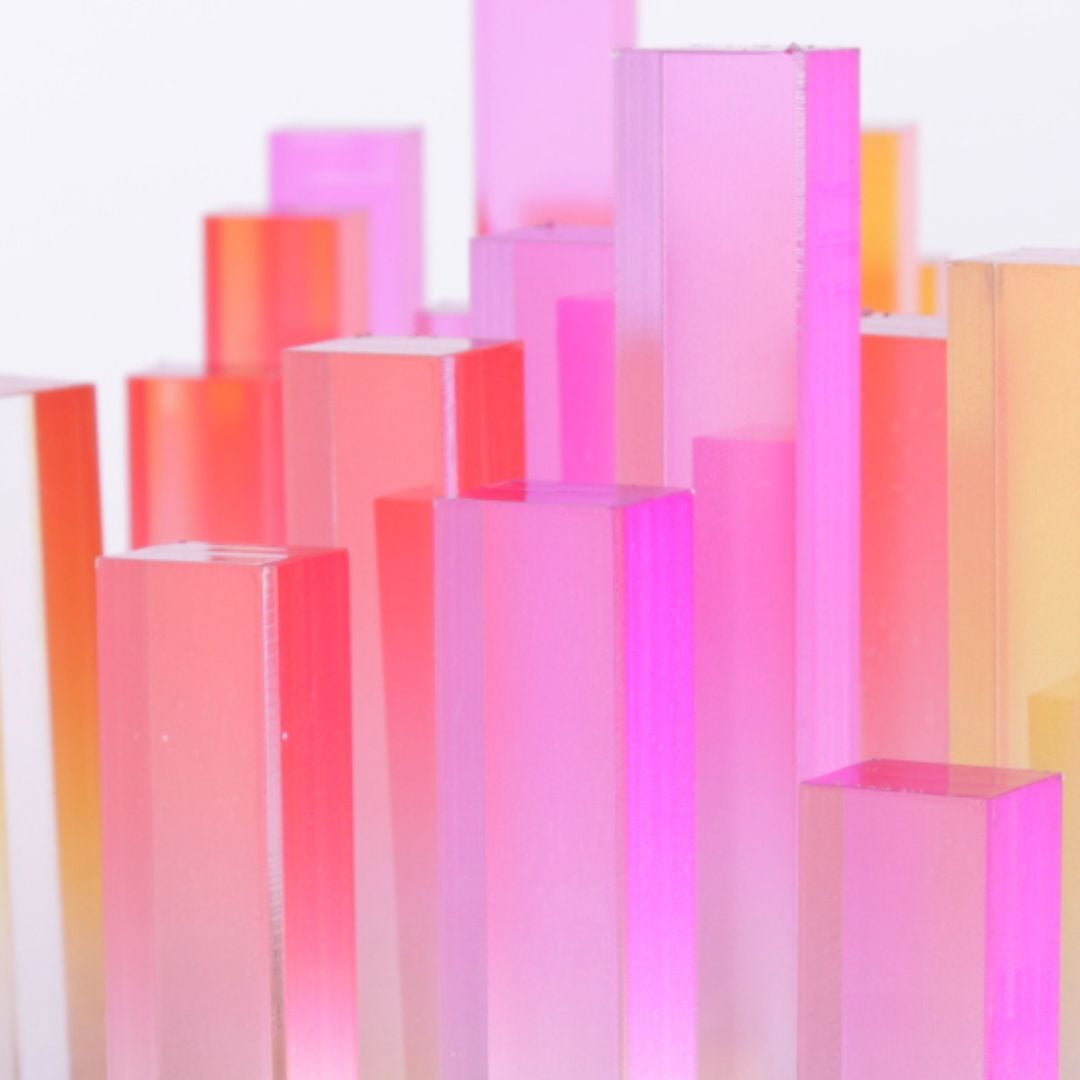
Unlike glass, acrylic can be produced in controlled color variations, gradients or full-surface pigmentation. This makes it particularly suitable for brand-driven awards and contemporary recognition systems.
Acrylic as a design-driven material
Acrylic is often selected when visual identity plays a central role in the award concept. Its precision in cutting, printing and layering allows branding to become structurally integrated rather than applied as surface decoration.
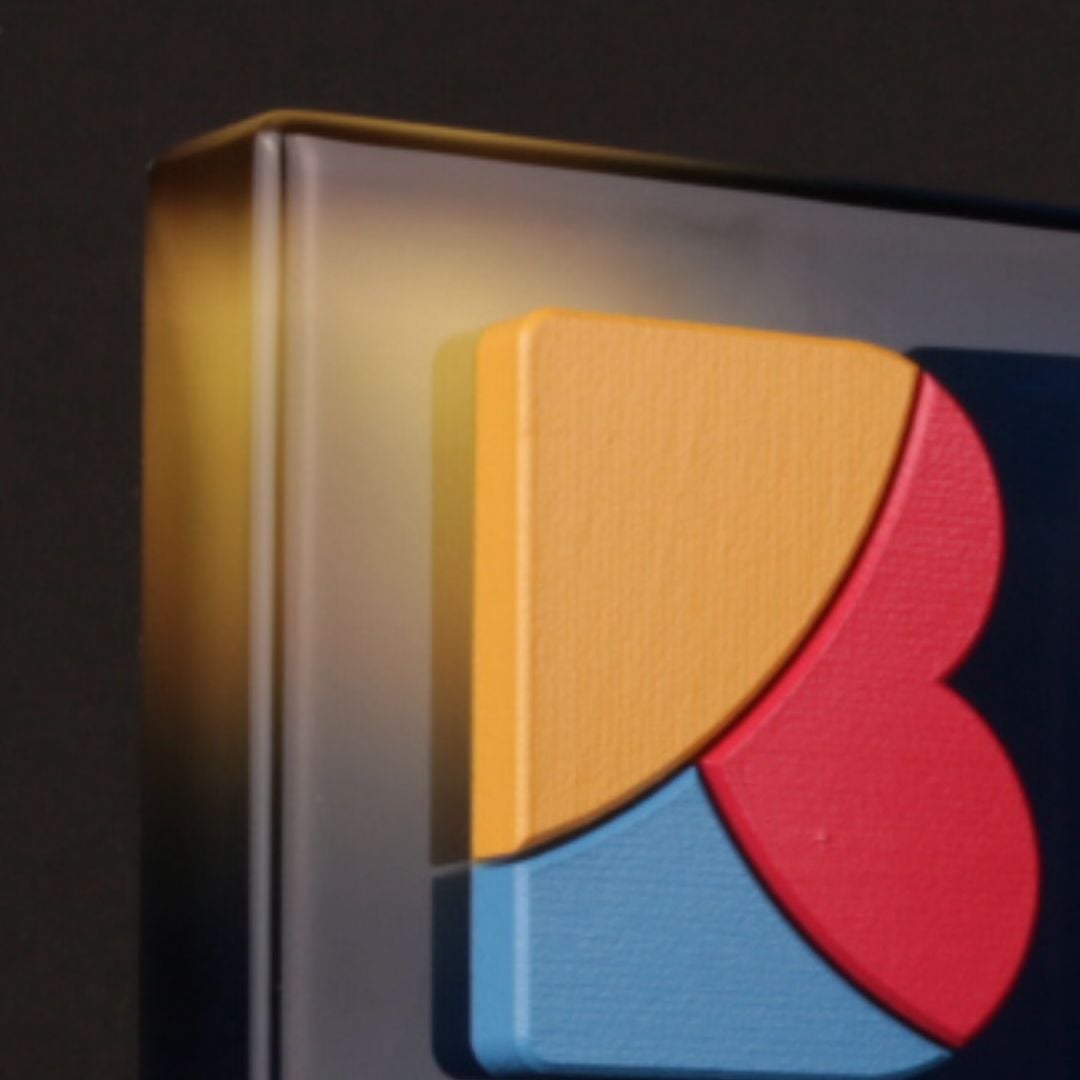
Because the material can be digitally fabricated with high accuracy, logos, typography and graphic systems can be embedded within the construction itself. Techniques such as UV printing, internal layering and controlled bonding create depth, color transitions and dimensional effects that feel intentional and refined rather than decorative.
Its lighter weight further expands design possibilities, enabling taller or wider compositions without excessive structural reinforcement. This makes acrylic particularly suitable for contemporary award systems where visual impact is achieved through clarity, layering and composition instead of material mass.

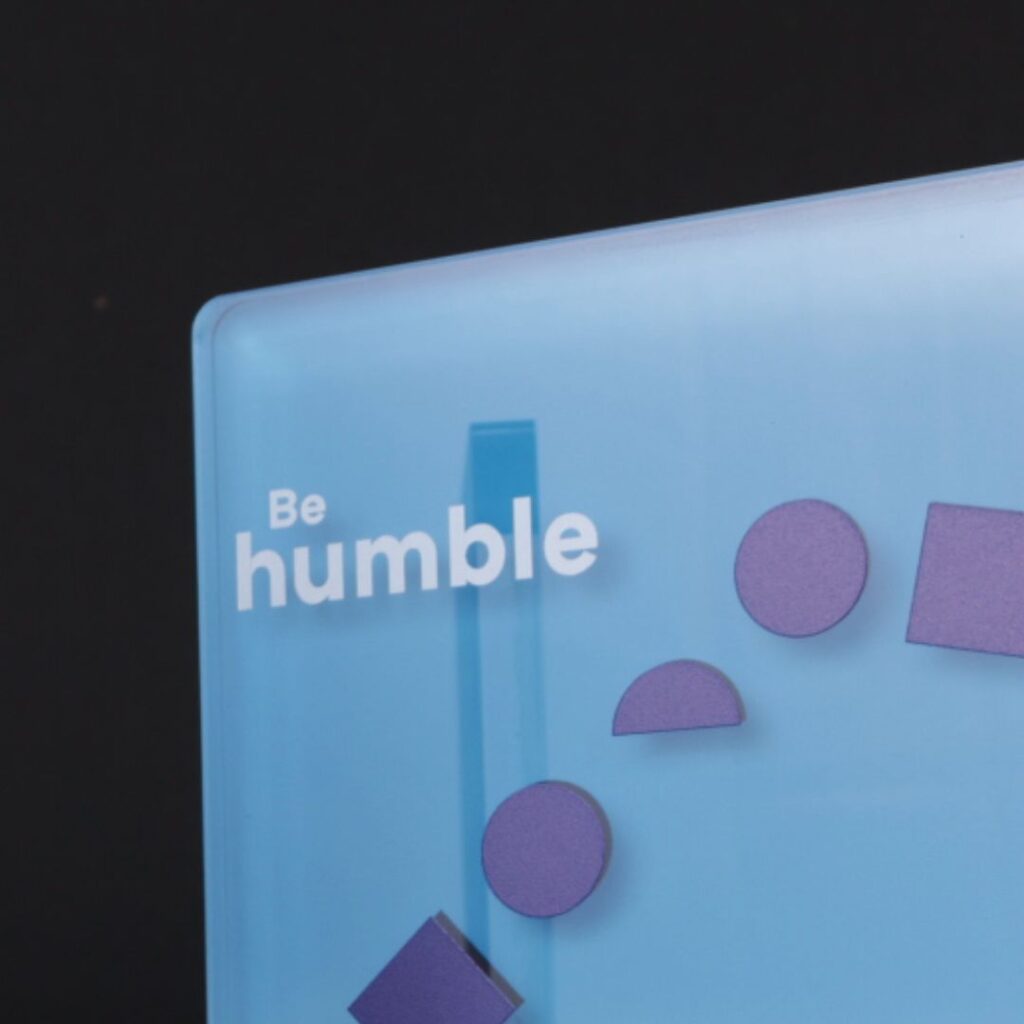
Engineered for clarity and control
Every acrylic component is digitally defined before fabrication.
Laser and CNC processes ensure sharp edges and repeatable geometry across single pieces or full award programs.
Polished or flame-treated edges enhance transparency and visual sharpness. Surface finishing is defined to balance gloss, matte texture or controlled diffusion.
Layered components are bonded using engineered techniques to maintain clarity without visible seams or distortion.
Our cases
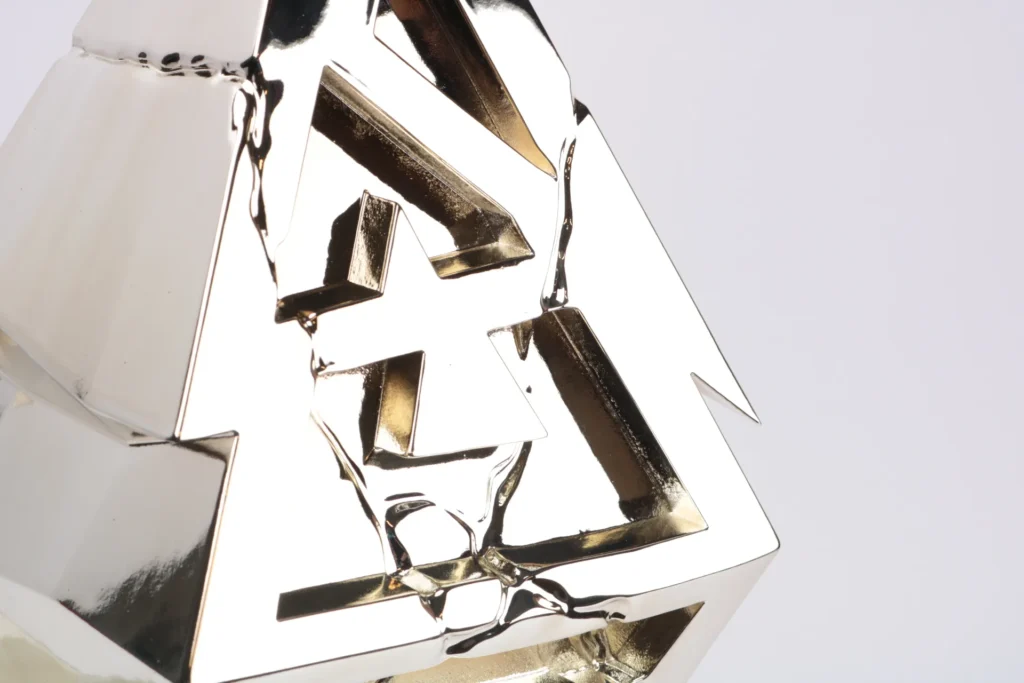
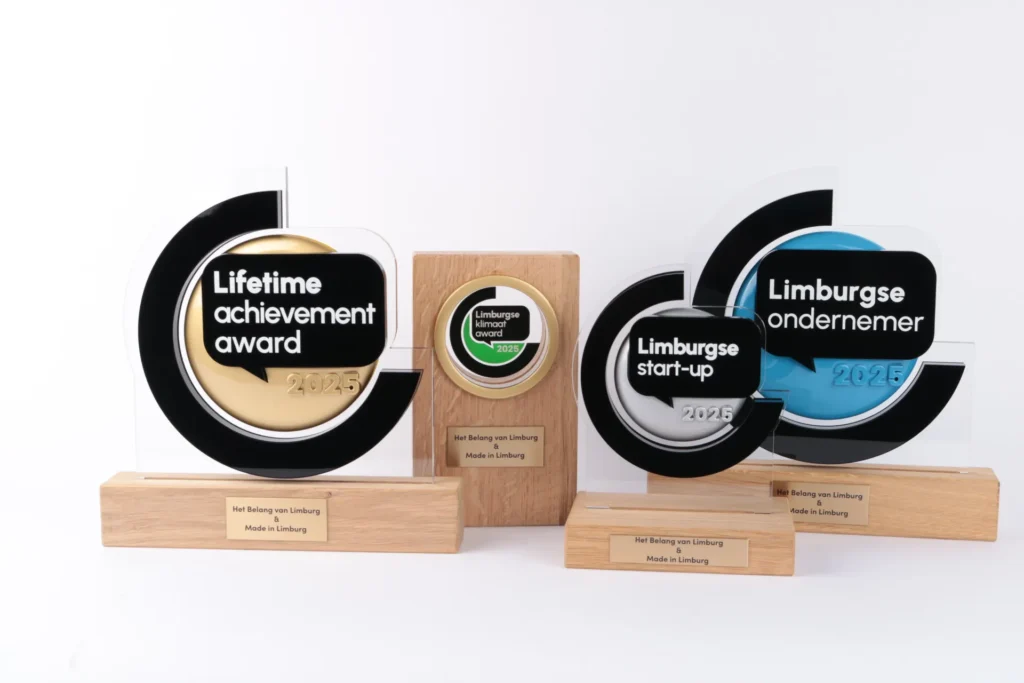
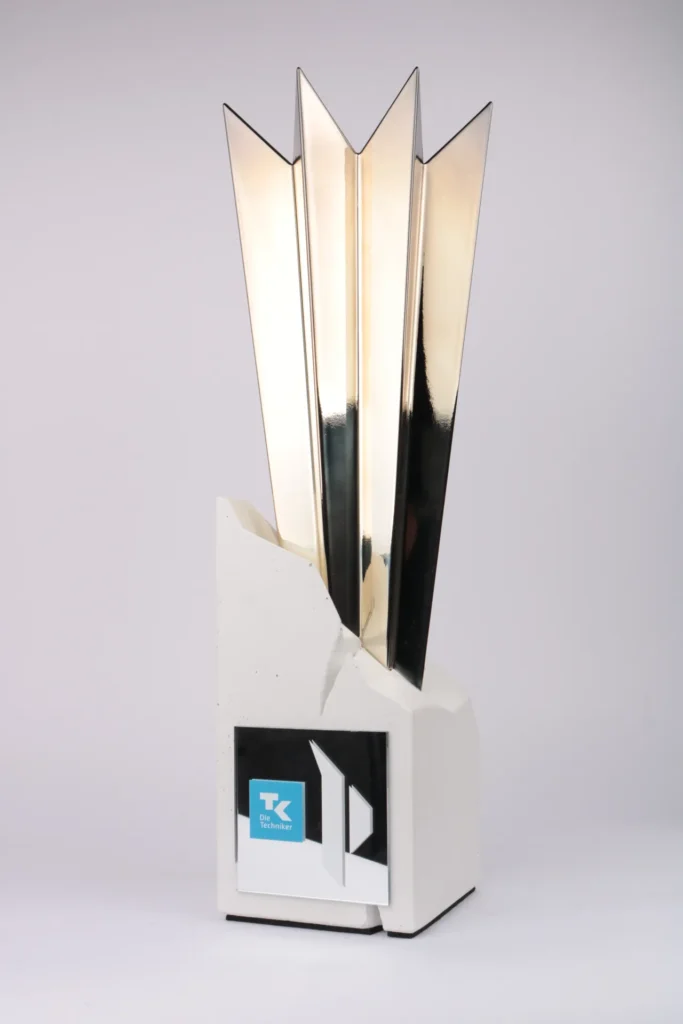
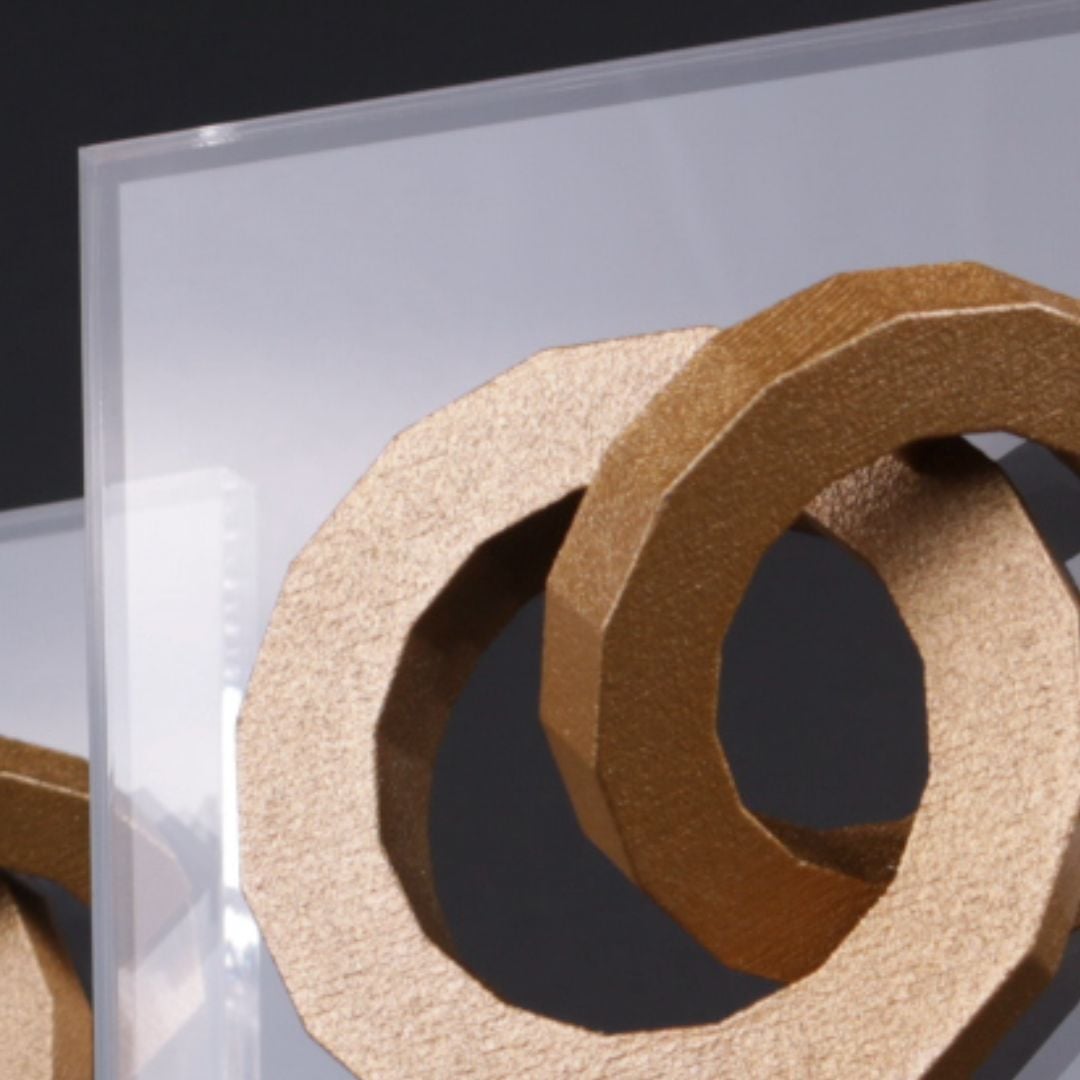
Innovative trophies created for global brands, esports tournaments and forward-thinking organizations.


When acrylic is the right choice
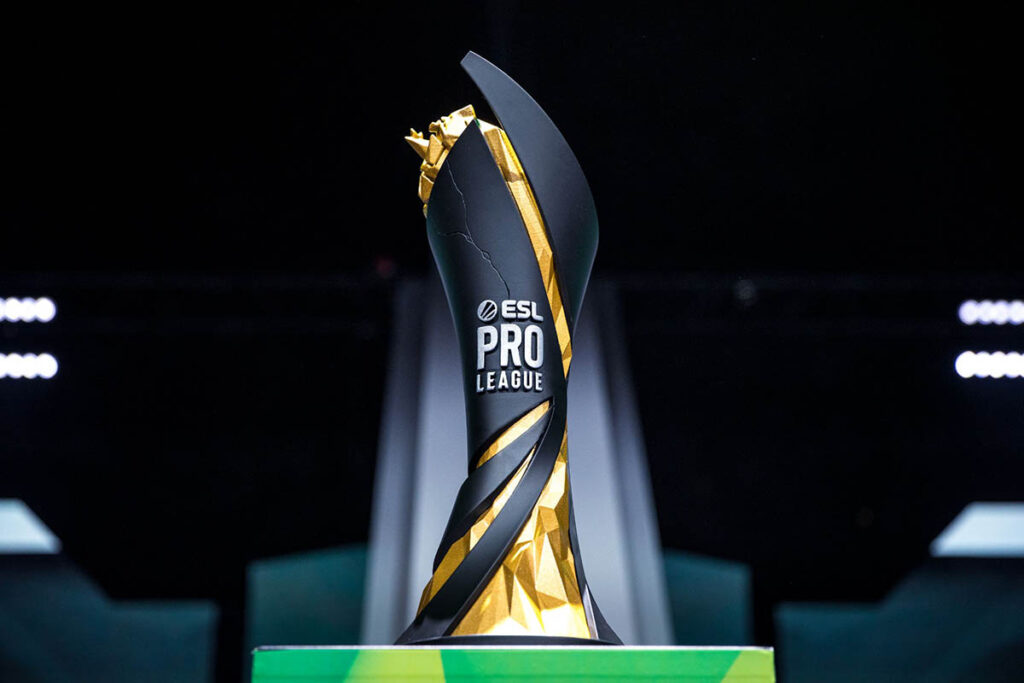
Acrylic is particularly effective when transparency, color and graphic integration define the visual concept.
It is the preferred material for brand activations, modern corporate recognition systems and awards where dimensional typography or layered visual effects are central. Because of its lighter weight, it performs well in larger formats or multi-piece award sets.
When visual expression and controlled light interaction are more important than material mass, acrylic offers creative flexibility without sacrificing structural stability.
Reviews
Bespoke trophies & awards for sports, esports, corporate and global events.
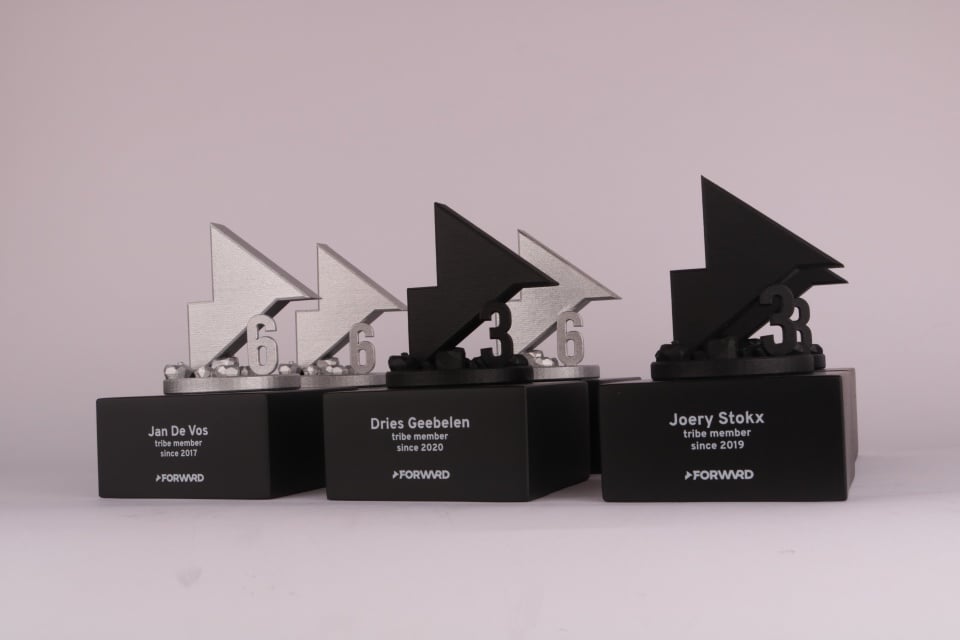
“We ordered a range of awards for our employees and were very happy with the result. Very personalized and unique.”
We ordered a range of awards for our employees. We were very happy with the result. Very personalized and unique! The team also accepts and picks up feedback to make sure we were happy with the result. Thanks team Fabit!The team actively listened to our feedback and made sure we were fully satisfied with the final outcome. Thanks, team Fabit.

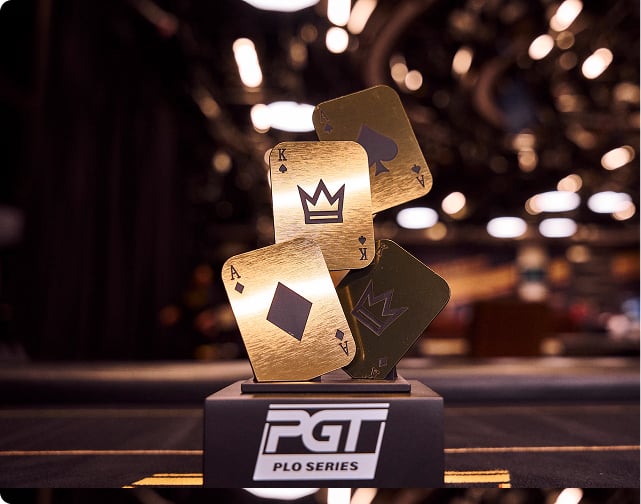
Fabit absolutely blew our expectations away with the 3D trophy for our PGT PLO Series in Las Vegas.
The players loved the look and feel. Fabit took our concept and delivered something even better than we envisioned. We will definitely work with them again.

Frequently Asked Questions
Acrylic is not chosen for weight or tradition, but for visual precision and structural flexibility. Below you will find detailed answers about layering, branding integration, durability and performance in professional award systems.

Senior Account Manager
What makes acrylic a strategic design material in award systems?
Acrylic is primarily selected when visual identity and graphic precision are central to the concept. Unlike glass or metal, it can be cut, layered and bonded with high accuracy, allowing logos, typography and brand elements to become part of the structure itself.
Because acrylic supports UV printing, embedded graphics and multi-layer construction, depth and color transitions can be engineered internally rather than applied superficially. This creates controlled transparency and visual hierarchy within the piece.
Its value lies in precision, repeatability and design freedom, making it particularly suitable for contemporary award systems.
How does layering enhance acrylic trophies?
Layering is one of acrylic’s strongest design advantages. Multiple sheets can be bonded together to create internal depth, shadow lines and dimensional transitions.
This technique allows graphic elements to appear suspended within the structure, producing a sense of movement and controlled transparency. Gradients, color shifts and opacity contrasts can be engineered between layers.
Instead of relying on weight or material density for impact, acrylic uses composition, alignment and light interaction to create visual presence.
Can acrylic integrate branding directly into the structure?
Yes. Acrylic allows branding to be structurally integrated rather than added afterward. UV printing, contour cutting and embedded films can become permanent parts of the layered construction.
Because the material is precisely machined, typography and logos remain sharp and consistent across production runs. Internal placement also protects visual elements from surface wear.
This makes acrylic especially effective for brand-driven awards where consistency, clarity and controlled color reproduction are critical.
Is acrylic durable enough for professional environments?
High-quality acrylic offers strong impact resistance compared to glass and performs reliably in controlled indoor environments. It is less brittle and more forgiving during transport and handling.
Structural integrity is defined during the design phase through thickness selection, bonding methods and, if required, integration with metal components for reinforcement.
When engineered correctly, acrylic maintains clarity and structural stability over long-term display.
Does acrylic discolor or lose clarity over time?
Professional-grade acrylic is UV-stable and designed to resist yellowing under normal indoor conditions. However, environmental exposure and handling influence long-term appearance.
Protective coatings and internal graphic integration reduce visible wear. Because many design elements are embedded between layers, they remain protected from abrasion.
With proper specification and finishing, acrylic retains its transparency and color fidelity for years.
Is acrylic suitable for scalable award programs?
Yes. Acrylic performs exceptionally well in repeatable production because it is digitally cut and processed without mold dependency.
This allows multiple categories, sizes and tiers to maintain strict visual alignment. Layering systems can be adapted across variations while preserving brand consistency.
Its lighter weight also simplifies logistics for international distribution, making it practical for global award programs.
Is acrylic considered a premium material?
Acrylic communicates modernity rather than traditional luxury. Its premium quality comes from execution, thickness, edge finishing and compositional discipline.
When layered with precision and combined with controlled printing techniques, acrylic can achieve a highly refined and contemporary presence. It excels in clean, graphic and forward-thinking design environments.
Its strength lies in clarity, structure and visual control.
Ready to Design
Your Next Iconic Trophy?
Let’s create something worth celebrating
Share your idea with us. We’ll design and produce a custom trophy that fits your brand,
your moment and your ambition, from first sketch to worldwide delivery.
- Response time: 24 hours
- Worldwide shipping