

Custom trophy maker: how to find the right manufacturer for your award
Finding the right custom trophy maker is one of the most consequential decisions in any award commissioning project. The manufacturer you choose determines the quality ceiling for your award, shapes the experience of the design and production process, and determines whether the finished piece reflects the occasion it is meant to mark. Not all trophy makers are equal, and the differences in capability, quality standards, and professional practice are significant enough to produce very different outcomes from the same brief.
This guide explains what to look for in a custom trophy manufacturer, how to evaluate their capabilities, and what red flags suggest you should look elsewhere. It is aimed at procurement professionals, event managers, and brand managers who are approaching this market for the first time or who want to improve on previous commissioning experiences.
Fabit
Custom trophies, engineered in 3D
Fabit designs and produces fully custom trophies for brands and global events. 3D design, in house production in Antwerp and worldwide delivery, with a response within 24 hours.
Define what kind of trophy maker you actually need
The first step in finding the right manufacturer is being clear about what you need. The trophy manufacturing industry spans an enormous range from mass-market catalogue suppliers producing generic awards in high volumes to specialist bespoke manufacturers who produce small quantities of fully custom pieces for demanding clients. These are fundamentally different businesses with different capabilities, processes, and pricing structures.
If you need large quantities of broadly similar recognition pieces at accessible price points, a manufacturer with efficient high-volume production capability is appropriate. These manufacturers excel at consistency, speed, and competitive unit pricing. Their design differentiation may be limited, but for programs where volume and reliability are primary requirements, they are well-suited to the brief.
If you need fully custom designs in premium materials for high-profile events, a specialist bespoke manufacturer is essential. These manufacturers invest in design capability, prototyping, and the craft processes required for complex, unique pieces. They work with demanding clients on projects where quality is the primary requirement and will not sacrifice it to cut costs.
Identifying which category your requirement falls into before approaching manufacturers prevents wasted time evaluating the wrong type of supplier. It also prevents the disappointment of commissioning a bespoke-capable manufacturer for a high-volume generic order and paying premium prices, or approaching a catalogue supplier for a bespoke commission and receiving disappointing results.
Evaluate portfolio quality critically
A trophy manufacturer’s portfolio is the most reliable evidence of what they are actually capable of producing. Review it critically and in detail, looking specifically for work that is relevant to your brief rather than being impressed by the overall volume of work shown.
Look for design quality and originality. A strong portfolio shows pieces with distinctive design character, clear creative thinking, and variety in approach. A weak portfolio shows the same design conventions repeated across many projects with minor variations. The former suggests a manufacturer with genuine design capability; the latter suggests competence at execution but limited design ambition.
Material quality is visible in good portfolio photography. High-quality metalwork, precisely cut and polished crystal, and well-finished acrylic all have characteristic visual properties that are apparent in good photographs. A portfolio of blurry or poorly lit images that obscure material quality may be obscuring a reason for that choice.
Consistency is another portfolio quality signal. If the best pieces in a portfolio are significantly better than the average pieces, ask why. Portfolio curation should reflect a manufacturer’s consistent quality standard, not their occasional best work. A portfolio where quality is variable suggests that output quality may also be variable in production.
Research reputation and references
Portfolio review tells you what a manufacturer has produced; reference checks tell you how they behave as a production partner. These are equally important aspects of supplier evaluation and should both be completed before making a commissioning decision.
Ask the manufacturer for client references from projects similar to yours in scope, complexity, and budget. Contact those references directly and ask specific questions: Was the project delivered on time? Did the finished award match the approved design? How did the manufacturer handle problems or revisions? Would they commission this manufacturer again and why?
Online reviews and case studies provide additional data points, but treat them with appropriate skepticism. Published testimonials are curated by the manufacturer. Third-party review platforms are more independent but still subject to selection bias. Direct conversations with reference clients are the most reliable source of honest assessment.
Industry reputation is harder to assess but worth pursuing. Do other professionals in your network have experience with this manufacturer? Are they mentioned or recognized in industry publications or award industry events? A manufacturer with a positive industry reputation across multiple independent sources is a more reliable choice than one with no external validation of their claims.
Assess design capability specifically
Design capability is distinct from production capability and should be evaluated separately. A manufacturer can have excellent production quality but limited design skill. For custom trophy commissions where original design is part of the brief, verifying design capability is essential.
Ask about who handles design within the organization. Is there an in-house design team, or is design handled by freelancers? What software tools and processes do they use? How many design iterations are included in a standard commission? How do they handle clients who have a specific visual direction versus clients who need creative direction from the manufacturer?
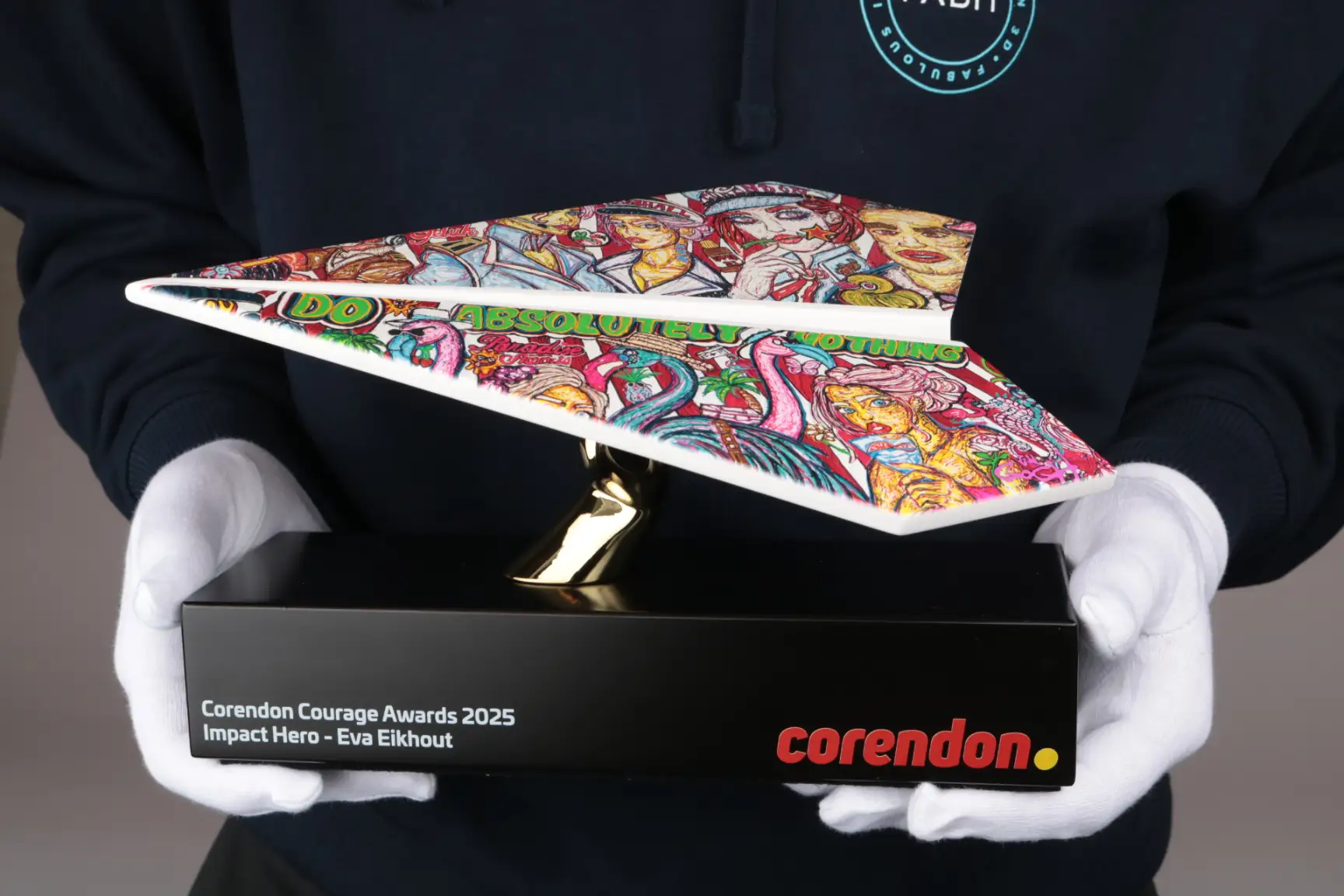
Request design samples that are specifically bespoke rather than catalogue adaptations. The strongest evidence of genuine design capability is work created from a blank page in response to a specific client brief. If the manufacturer cannot show examples of this, their design capability may be limited to adapting existing templates.
Ask about the design process in detail. A professional design process typically involves an initial brief review, concept development, client presentation of options, feedback incorporation, and progression through rendered concepts to prototype. A manufacturer who cannot describe a structured design process may be improvising in ways that create unpredictability in the outcome.
Understand manufacturing capabilities and limitations
Different manufacturers have different production capabilities, and matching the manufacturer’s actual capabilities to the requirements of your brief prevents commissioning a piece that cannot be produced to the quality you require.
Ask what manufacturing processes the manufacturer uses. Casting, CNC machining, 3D printing, glass cutting, laser cutting, and hand finishing all require different equipment and skills. A manufacturer who uses only one process has design limitations that a manufacturer with multiple processes does not. For complex briefs that would benefit from a combination of processes, multi-capability is a significant advantage.
Materials that a manufacturer works with regularly are those they will produce most consistently and confidently. Ask about specific materials you are considering and request to see examples of previous work in those materials. A manufacturer who has extensive experience with optical crystal will produce better crystal awards than one who uses it occasionally.
Quality control processes reveal how seriously a manufacturer takes consistency. Do they inspect every piece before shipping? Do they have documented quality standards? Do they offer replacements for pieces that do not meet agreed specifications? A manufacturer with robust quality control protects your program from the problems that inevitably occur in any manufacturing process.
Evaluate communication and responsiveness
How a manufacturer communicates during the evaluation and quoting stage is often a reliable predictor of how they will communicate during production. Professional, responsive, and clear communication during the sales process suggests similar behavior during the project. Poor communication before the order is placed rarely improves after it is.
Response time to quote requests is a basic indicator. A manufacturer who takes weeks to respond to an initial enquiry is likely to be similarly slow at critical project milestones. In award production where timelines are often tight, slow communication is a serious operational risk.
Clarity of written communication matters. A quote that is vague, ambiguous about what is included, or unclear about terms and conditions creates risk for the buyer. A well-structured quote that specifies scope, materials, quantities, timeline, and terms clearly shows professional commercial practice.
The quality of questions asked during the briefing stage is also telling. A manufacturer who asks thoughtful, specific questions about your brief, about the audience, the occasion, the design direction, the timeline, is engaging genuinely with the challenge. A manufacturer who provides a quick quote without apparent curiosity about the specifics of your need may be providing a generic response that does not reflect your actual requirements.
Understand pricing and payment structure
Trophy manufacturer pricing varies significantly for the same specification, and understanding what is driving price differences between quotes is important for making a genuine value comparison. The cheapest quote is not necessarily the best value, and the most expensive is not necessarily the highest quality.
Request itemized quotes rather than single total prices. Breaking the quote into design, tooling, unit production, personalization, packaging, and logistics separately reveals where costs are concentrated and where different manufacturers are making different choices. A lower total quote that excludes prototype production, for example, is not directly comparable to one that includes it.
Payment terms should be clearly stated and commercially reasonable. Standard industry practice typically involves a deposit on order confirmation, progress payments at design approval and prototype approval milestones, and a balance on delivery. Manufacturers who require full payment upfront before any design work or prototyping should be evaluated carefully.
Rush premium policies are important to understand if your timeline is at all compressed. What additional cost applies if production needs to be accelerated? Are there design stages that can be shortened, or does rush production create risks to quality? Understanding these answers before a timeline emergency occurs is significantly better than discovering them under pressure.

Consider specialist versus generalist manufacturers
Some manufacturers specialize in specific categories of trophy production, sports trophies, corporate awards, esports pieces, deal tombstones, while others offer broader general capability. Understanding whether a specialist or generalist better serves your brief is worth considering as part of the selection process.
Specialists often have deeper knowledge of the design conventions, material preferences, and client expectations in their category. A manufacturer who has spent years producing corporate awards for financial services clients understands that audience’s expectations without being briefed on them. This context reduces the risk of producing something that technically meets the brief but feels wrong for the occasion.
Generalists offer more flexibility and may be more appropriate when a brief deliberately crosses category boundaries, an esports trophy designed with corporate refinement, or a sports award with a contemporary design language borrowed from product design. The design freedom of working with a manufacturer who is not constrained by a specific category’s conventions can be valuable in the right circumstances.
The scale of the manufacturer relative to your commission also matters. A very large manufacturer may not give a small or mid-sized order the attention it deserves. A very small manufacturer may lack the capacity or processes to handle a large, complex order reliably. Finding a manufacturer whose capacity and focus aligns with the scale and complexity of your project is a practical matching consideration.
International versus domestic sourcing
Trophy manufacturers operate globally, and commissioning from an international manufacturer rather than a domestic one carries both advantages and risks that deserve honest evaluation.
International sourcing, particularly from manufacturing hubs with lower labor costs, can offer significant price advantages for certain categories of award. For high-volume, less complex commissions where production consistency and cost per unit are primary considerations, international sourcing from established manufacturers in appropriate regions can be a sound commercial decision.
The risks of international sourcing include longer and more variable logistics timelines, quality control challenges when distance prevents in-person inspection, communication difficulties across time zones and language barriers, and customs and import complexity that adds both cost and unpredictability to the delivery.
Domestic or near-shore manufacturers offer shorter lead times, easier site visits for quality inspection, simpler logistics, and typically better communication responsiveness. For complex bespoke commissions where iterative design development and close collaboration are important, proximity to the manufacturer adds real value.
The total cost of international versus domestic sourcing should include logistics, potential duty and tax, the cost of additional quality checking, and the risk premium for longer and more variable timelines. These factors can significantly close the apparent cost gap between international and domestic options.
Making the final selection
After evaluating portfolio quality, references, design capability, manufacturing processes, communication, and pricing, you should be in a position to make a well-informed selection. The final decision should be based on which manufacturer best matches your specific requirements in the dimensions that matter most for your brief.
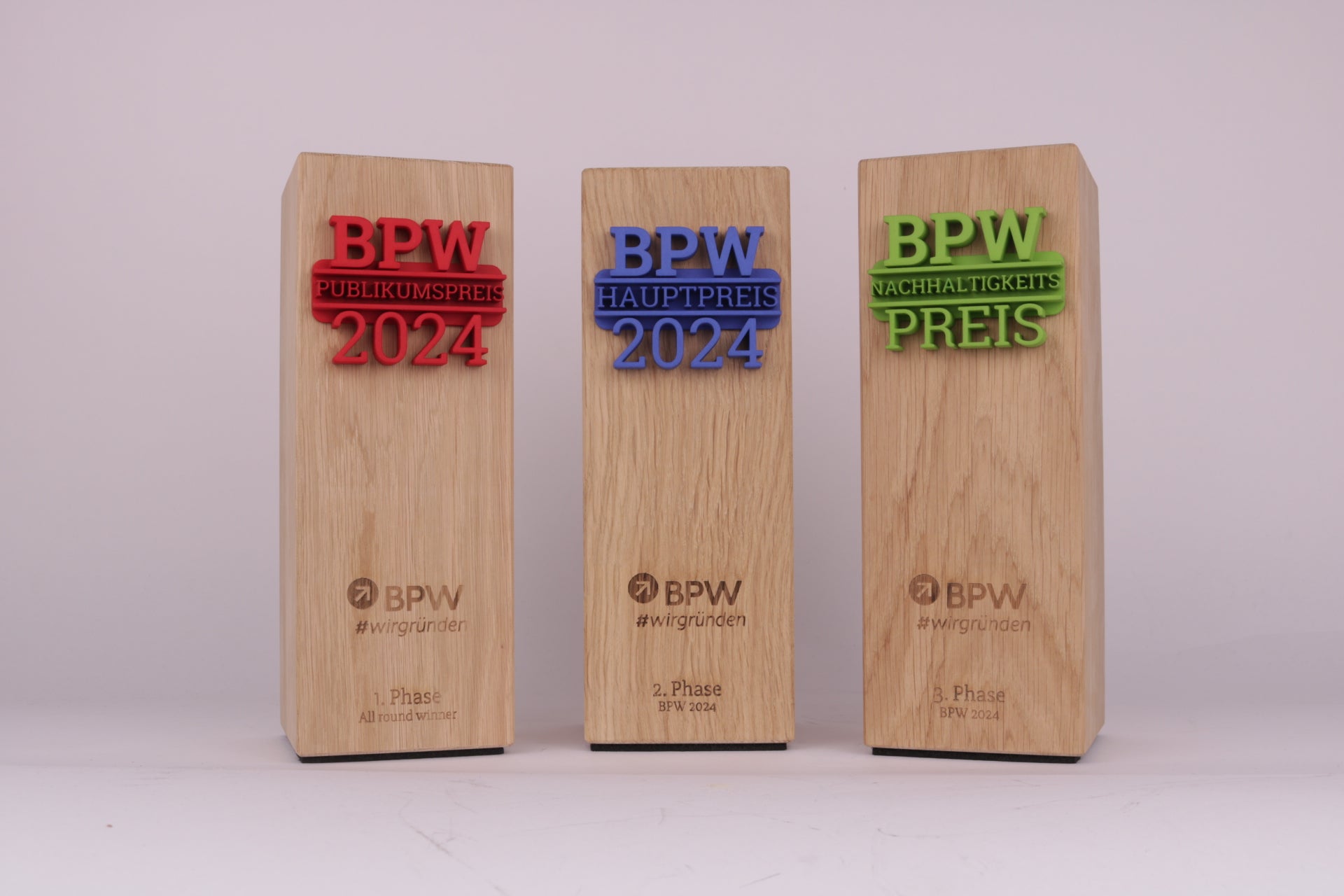
No manufacturer is optimal across all dimensions simultaneously. Prioritizing the most important criteria for your specific commission helps resolve close decisions. For a bespoke flagship award where design quality is paramount, design capability may outweigh price. For a large-volume recognition program where consistency and cost per unit are primary, production efficiency may outweigh bespoke design capacity.
Trust your assessment of the communication quality. The working relationship with your manufacturer is as important as the quality of the object it produces. A manufacturer with excellent technical capability but poor project communication creates more uncertainty and risk than one with slightly less exceptional capability but professional, reliable project management.
Build in contingency for the unexpected. Even with an excellent manufacturer and a well-managed project, unexpected issues arise in custom production. Choosing a manufacturer with a reputation for handling problems transparently and effectively is more valuable than choosing one with a slightly lower quoted price but no demonstrated track record of resolving complications.
Building a long-term manufacturer relationship
The most efficient and most consistent approach to custom trophy procurement is maintaining long-term relationships with one or two trusted manufacturers rather than re-tendering every commission from scratch. Long-term relationships build shared understanding that improves outcomes on every project.
A manufacturer who knows your brand, your quality standards, your typical brief requirements, and your internal approval processes can respond more efficiently and more accurately than one approaching your brief for the first time. This institutional knowledge is a genuine asset that takes time to build and is worth protecting.
Multi-year or framework agreements with preferred manufacturers create commercial stability for both parties and can be a basis for negotiating better pricing or priority capacity access in return for volume commitment. These arrangements work when the relationship is genuinely productive; they are not appropriate for manufacturers who are delivering inconsistent results.
Even in a long-term relationship, periodic market reviews, comparing your preferred manufacturer’s quality and pricing against alternatives, maintain commercial discipline and ensure the relationship remains genuinely beneficial. Good manufacturers welcome this; it gives them an opportunity to compete for continued partnership on fair terms.
Finding the maker who delivers
Finding the right custom trophy maker for your award program is a process that rewards careful evaluation over quick selection. The manufacturers who consistently produce exceptional awards for demanding clients earn that reputation through design quality, manufacturing capability, professional communication, and reliable delivery, and those qualities are recognizable through the evaluation process described in this guide.
The time invested in proper supplier selection protects the investment in the awards themselves. A trophy that fails to reflect the occasion it marks, due to inadequate manufacturer capability or poor project management, undermines the recognition program it was commissioned to serve.