
Trophy vs award: what is the difference and when does it matter
The terms trophy and award are often used interchangeably in everyday language, but they carry distinct meanings that are worth understanding when commissioning recognition objects. The difference between a trophy and an award is not purely semantic, it reflects different purposes, different design conventions, and different expectations on the part of recipients. Getting the terminology right signals professional understanding and helps communicate more precisely with manufacturers and event planners.
This article explains the distinction between trophies and awards, explores how each category has developed its own conventions, and offers practical guidance on when each format is most appropriate.
Fabit
Custom awards, designed and built in house
Fabit designs and produces custom awards for brands, ceremonies and programs. 3D design, in house production and worldwide delivery, with a response within 24 hours.
The core distinction between trophy and award
A trophy, in its most precise usage, is a recognition object given to mark competitive achievement, specifically, winning a competition. The word has its roots in the Greek “tropaion” and later Latin “trophaeum”, originally referring to arms captured from a defeated enemy and displayed on the battlefield. In modern usage, a trophy marks the defeat of competition: a winner of a race, a tournament, a league championship.
An award, by contrast, is a broader category that includes any formal recognition of merit, contribution, or achievement, competitive or otherwise. Awards are given for long service, creative excellence, professional conduct, academic achievement, and countless other criteria that do not involve direct competition. The corporate employee of the year award is an award, not a trophy, because it recognizes contribution rather than competitive victory.
This distinction is genuinely useful in practice. When briefing a manufacturer, specifying whether you need a trophy or an award helps them understand the use case, the likely design conventions to draw on, and the appropriate character of the piece. These categories have developed different aesthetic traditions for good reasons.
The blurring of the two terms in common usage does not make the distinction meaningless. Professional event organizers, recognition specialists, and manufacturers consistently use these terms with their precise meanings, and communicating within those conventions produces clearer briefs and better results.
When to use a trophy
Trophies are most appropriate when the recognition being given reflects competitive victory. Sports championships, tournament wins, competition finals, and any event where participants have competed directly against each other for a defined outcome are the natural home of the trophy.
The design conventions for trophies reflect their competitive heritage. Dimensional, often figurative, frequently large in scale and substantial in weight, trophies are designed to mark achievement with visual authority. The cup form, large, handleded, elevated on a base, is perhaps the most recognizable trophy convention, with roots in the British Victorian tradition of competitive sport.
Competitive achievement typically means a clear winner and losers, which is why trophies are often given in a single format for first place, with lower-tier recognition pieces for runners-up and participants. The hierarchy of recognition follows the hierarchy of competitive outcome. First place receives a trophy; second and third may receive plaques or medals.
The perpetual trophy, a single object that is passed from champion to champion each year, with the current holder’s name added to its surface, is a specifically trophy convention. Custom trophies designed as perpetual pieces accumulate history in a way that annual new productions cannot, and this accumulated history is part of what gives them their character and value.
When to use an award
Awards cover a much broader range of recognition occasions than trophies. Any time recognition is given for merit, achievement, contribution, or excellence that is not specifically competitive in nature, the term award is more appropriate than trophy, and the design conventions appropriate to awards are different.
Corporate recognition programs, employee of the year, long-service recognition, values-based recognition, are award programs rather than trophy programs. The pieces given in these contexts are awards: recognizing contribution, conduct, or tenure rather than competitive victory. Design conventions for corporate awards tend to be more refined and less athletic than trophy conventions.
Industry awards, the annual recognition events that operate across professional sectors from finance to media to property, may be run as competitive events with judges selecting winners, but the recognition format is typically an award rather than a trophy. The distinction here is cultural: these events frame the recognition as acknowledgment of excellence rather than victory over other competitors.
Academic prizes, artistic recognition, and professional achievement recognition of all kinds are awards. The physical objects given in these contexts range from plaques and certificates to three-dimensional pieces, but they are awards regardless of their form. The term “trophy” in these contexts would feel culturally inappropriate and slightly incongruous.

Trophies and awards in the context of medals
Medals occupy a third position in the recognition landscape alongside trophies and awards, and understanding how all three relate to each other helps in designing comprehensive recognition programs. Medals are most strongly associated with sporting competition, particularly at international and Olympic levels.
A medal is typically worn on the body, around the neck, on a ribbon, rather than displayed in a fixed location. This characteristic gives medals a different relationship to the recipient’s daily life from trophies and awards. A medal at a major championship is a personal, portable recognition object; a trophy is a shared, displayed one.
In program design terms, medals are frequently used alongside trophies for the same competition. A running race might give the winner a trophy for display, with medals for all finishers that they can wear to celebrate completion. The trophy marks the competitive outcome; the medals mark participation and completion in a format that every participant can carry with them.
Awards programs sometimes use medals as their recognition format rather than three-dimensional pieces or plaques. This is particularly common for military and civic honor programs where the medal tradition has deep cultural roots. In these contexts, the medal carries the full weight of the recognition without requiring the permanent display association that trophies and award plaques imply.
Design conventions that separate the two categories
The visual language of trophies and awards has developed differently over time in ways that reflect their different purposes. Understanding these conventions helps designers and commissioners make choices that feel appropriate to the context rather than importing one category’s conventions into the other.
Trophies tend to be larger, three-dimensional, and often figurative. Sports trophies in the traditional mold incorporate figurines, athletic poses, and references to the specific sport being recognized. They are designed to be seen from a distance, across a field, from an audience in an arena, and their scale and visual boldness reflect this.
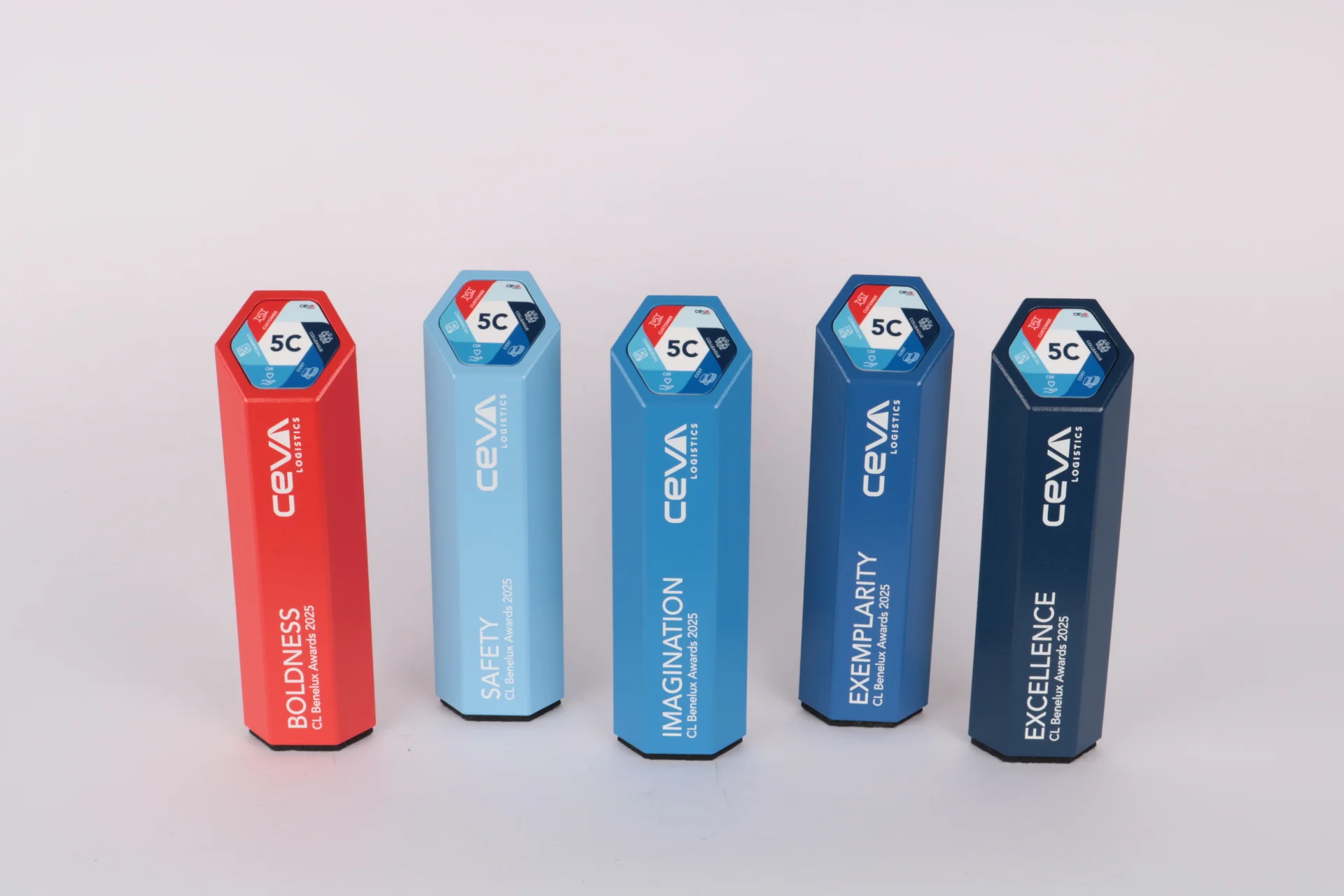
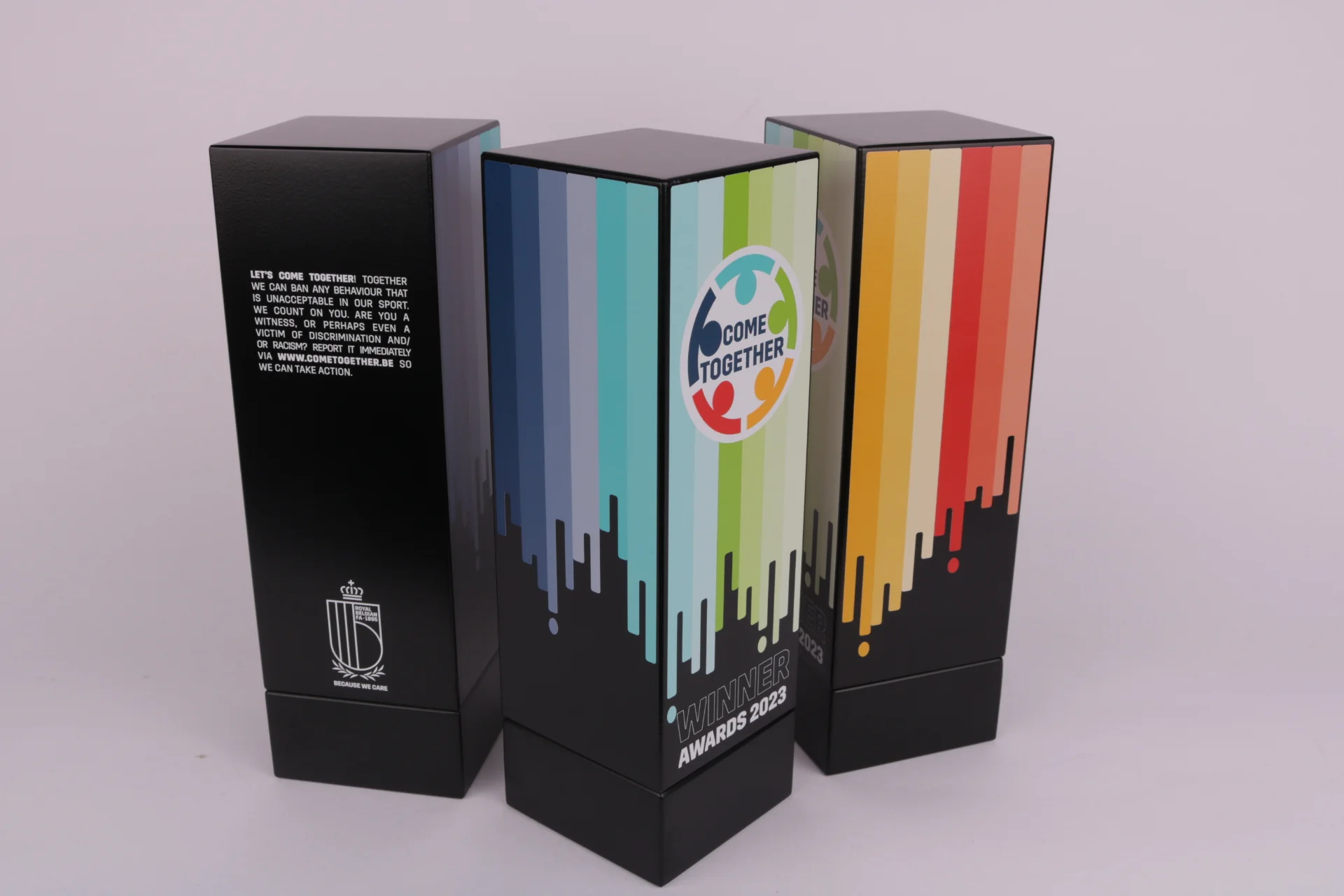
Awards tend to be more refined and often less dimensional. Corporate awards in crystal or glass, plaques mounted for wall display, and elegant recognition pieces that would not look out of place in a professional office reflect the more restrained aesthetic of recognition programs in professional environments. They are designed for close inspection and personal display rather than broadcast-distance visibility.
The material associations of the two categories differ as well. Metal, particularly gold and silver plating, is the dominant material tradition for trophies. Glass, crystal, and refined metal are more common in award design. These are not absolute rules but reflect genuine cultural conventions that have developed over centuries of practice in each category.
The award plaque: a distinct recognition format
The award plaque deserves specific treatment as a recognition format that is unambiguously an award rather than a trophy. Custom plaques have specific design conventions and display functions that distinguish them from both trophies and three-dimensional awards.
A plaque is a flat or shallow relief object designed for wall mounting. Its form means it occupies a permanent, fixed position in its environment, a wall, a door, a panel, rather than sitting on a desk or shelf. This display characteristic makes plaques particularly appropriate for recognition that is meant to be publicly visible in a shared space.
Commemorative plaques for buildings, public spaces, and institutional environments have their own strong tradition. Memorial plaques, dedication plaques, and achievement plaques in public spaces represent the most permanent form of recognition, inscribed in metal and mounted for display across decades or centuries. This tradition gives plaques a particular association with longevity and institutional memory.
For individual recipients, plaques are particularly appropriate for long-service recognition and significant achievement acknowledgment where permanence is part of the message. A mounted plaque on a wall communicates that the recognition is considered part of the environment rather than a temporary acknowledgment.
Language conventions in awards programs
The language used to describe recognition objects matters for how recipients and audiences perceive them. Using trophy and award interchangeably can create unintended implications, and being deliberate about language is part of running a professionally credible recognition program.
Calling a non-competitive recognition piece a “trophy” can imply that recipients have competed against their colleagues in a way that may not reflect the intended spirit of the program. If the recognition is for contribution and conduct rather than competitive performance metrics, framing it as an award is more accurate and more appropriate.
Conversely, presenting competitive sports recognition as “awards” rather than “trophies” can dilute the celebratory character of the recognition. In sporting contexts, winners expect to receive a trophy: an object that reflects competitive victory rather than the more diffuse recognition implied by “award.”
The names given to specific categories and programs also affect how they are perceived. “Employee of the Year Award” reads differently from “Champion of the Year Trophy” even in a corporate context. The word trophy carries athletic associations; in non-competitive corporate recognition, “award” is almost always the more appropriate term.
Global variation in trophy and award terminology
Different languages and cultures have different relationships with the words for recognition objects, which creates interesting challenges in international award programs. The distinction that exists between trophy and award in English is not always cleanly represented in other languages.
In French, “trophée” covers both competitive and non-competitive recognition. In German, “Trophäe” is more closely associated with competitive achievement, while “Preis” (prize) and “Auszeichnung” (honor or distinction) are used for non-competitive recognition. In Spanish, “trofeo” is broadly equivalent to the competitive English sense of trophy.
For international award programs that operate across multiple languages and cultures, consistent terminology is a communication design challenge. A global recognition program that uses its English terminology without considering how it translates into the languages of its various markets may create inconsistencies that undermine the program’s coherence.
The physical object itself transcends language in many ways, a well-designed recognition piece communicates its intent without words. But the naming conventions of the program, the categories, and the events that deliver recognition all require careful translation work for global programs to feel consistent and culturally appropriate.
The role of the recipient in choosing the right format
Understanding what the recipient expects and values from a recognition object helps determine whether a trophy, award, plaque, or other format is most appropriate. Different contexts, cultures, and professional environments create different expectations that good program design should address.
Athletes in competitive sports contexts expect trophies for competitive success. Presenting a plaque instead of a trophy for winning a competition would feel deflating regardless of the plaque’s quality. The format expectation is so strong in competitive sports that departing from it requires a very compelling reason.
Corporate professionals expect awards, typically in refined, professional materials, for business recognition. A sports-style trophy in a corporate recognition program can feel incongruous or even slightly condescending, suggesting that the organization has not thought carefully about what is appropriate for its audience.
Recipients in creative industries, academic contexts, and artistic communities have their own expectations that do not always align with either the sporting or corporate conventions. Designing recognition programs for these audiences requires understanding what the specific professional culture values and what forms of recognition carry the most meaning within it.
Practical implications for commissioning
Understanding the trophy vs award distinction has practical implications for the commissioning process. Manufacturers and designers who specialize in sports trophies have different capabilities and aesthetic sensibilities from those who specialize in corporate awards. Approaching the right specialist for the specific brief produces better results.
Brief writing benefits from clarity about which category applies. A brief for a sports trophy that describes design preferences using corporate award conventions, refined, understated, appropriate for office display, will confuse a manufacturer who expects a brief oriented around competitive achievement and athletic energy.
Budget expectations differ between the two categories as well. Sports trophies for major championships are typically given in small numbers, one or a few winners, and the per-unit investment can be substantial. Corporate award programs often produce larger quantities across multiple categories, with per-unit cost constraints that reflect the program’s breadth.
Production timeline expectations also differ. Sports trophies often have a ceremonial presentation date that is fixed and non-negotiable. Corporate award programs typically have more flexibility in delivery timing. These different timeline pressures require different planning approaches and different conversations with manufacturers.
Designing programs that use both trophies and awards
Some recognition programs benefit from using both trophies and awards for different purposes within the same event or organization. A corporate awards evening, for example, might present three-dimensional awards for performance and contribution recognition while including a competitive element, a team challenge or individual performance competition, that is recognized with a more traditional trophy.
This combination approach acknowledges that recognition needs are not uniform across an organization or event. Different types of achievement warrant different types of recognition, and the format of the recognition object is part of the message.
Programs that combine trophies and awards effectively maintain design coherence across the two formats while using the visual distinction between them to reinforce the distinction between competitive and non-competitive recognition. A shared design language, consistent use of color, material, or scale, creates coherence while allowing the trophy and award formats to carry their distinctive meanings.
The most sophisticated recognition programs use the full vocabulary of recognition formats, trophies, awards, plaques, medals, certificates, intentionally and deliberately, with each format doing specific work in the program’s overall recognition architecture.
The right format for the right occasion
The distinction between a trophy and an award is not academic. It reflects genuine differences in purpose, convention, and cultural meaning that affect how recognition objects are designed, commissioned, and received. Understanding these differences allows organizations to make more deliberate and more effective choices in how they recognize achievement.
When the format of recognition matches its purpose and context, the object carries more meaning for its recipient. When the format is inappropriate or arbitrary, even excellent design and quality materials cannot fully compensate for the misalignment. Getting the basic categorization right is the starting point for everything else.